
BUYER’S GUIDE
BMW E32 7 Series Review
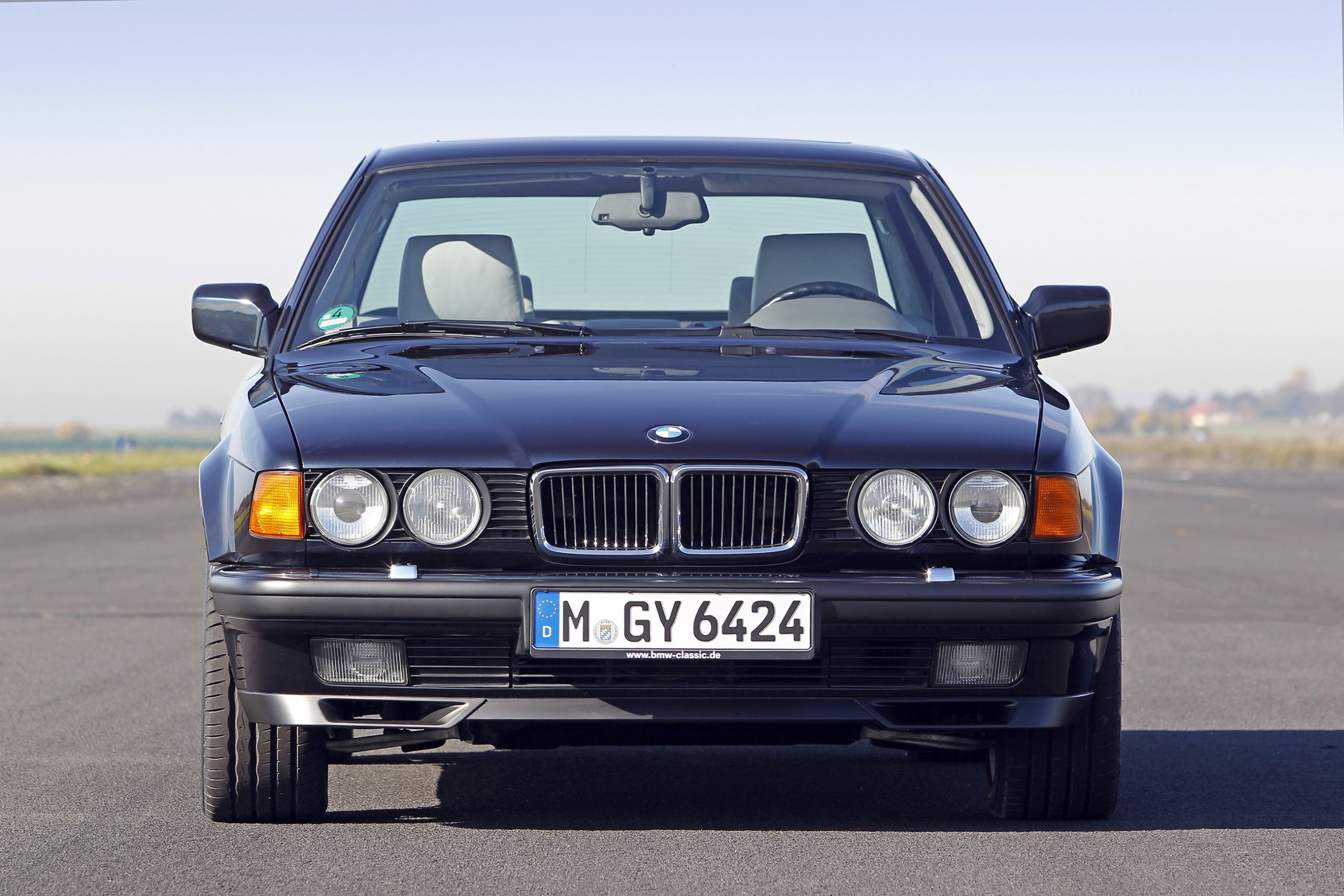
The E32 7 Series was BMW’s attempt to break out from the shadow of the Mercedes S-Class, and is becoming ever more popular with modern drivers. If you’re looking at picking up a BMW E32 then this buyers guide will help you get to grips with the different options available, as well as how to get proper insurance for it, and even how easy it is to get your hands on spare parts.

Manufactured
1992 to 1994
Fuel Type
Petrol
Engine Sizes
4,000cc
Engine Type
V12
Drive Configuration
RWD
What is the BMW E32 7 Series?
A large luxury saloon, the BMW E32 is the second-generation of BMW’s 7 Series. It was released in 1986 to replace the E23, and brought BMW’s flagship properly into the modern executive-car era, with straight-six, V8 and V12 engines, advanced electronics and short- or long-wheelbase body styles.
For buyers today, the E32 is increasingly popular as it offers old-school BMW build quality, understated styling and serious long-distance comfort. A good one feels refined, solid and quietly special. The warning is that this was a complex luxury car when new, and age has not made neglected examples cheaper to repair. Buy on condition, history and evidence of careful ownership rather than engine size alone.
When was the BMW E32 7 Series produced?
The BMW E32 7 Series was produced from June 1986 until April 1994, and was primarily built at BMW’s Dingolfing plant in Germany.
The E32 launched with the six-cylinder 730i and 735i models, with the 750i and 750iL being added to the range in 1987 and powered by the 5.0-litre M70 V12 engine.
BMW introduced advanced equipment over the course of the E32’s production run, including electronic damper control, traction control, dual-zone climate control, projector headlights, and xenon headlamps and double glazing later on. Long-wheelbase “iL” models gave extra rear-seat space and are especially appealing to buyers who want the full luxury experience.
The major mechanical change came in the early 1990s, when BMW introduced M60 V8 engines. The 740i effectively replaced the 735i as the stronger mainstream performance choice, while the 730i V8 offered smoother running than the earlier six-cylinder car. The E32 was replaced by the E38 in 1994.
For buyers, early six-cylinder cars are simpler and often cheaper to maintain; V12 cars are the most charismatic but complex; 740i models are often seen as the best balance of performance and usability.
What do people love about BMW E32 7 Series?
Owners love the E32’s blend of engineering, comfort and restraint. It has the feel of a proper old BMW: solid controls, clear instruments, excellent seats and a relaxed but capable driving character.
The styling has aged well because it is elegant rather than showy. Six-cylinder cars feel smooth and honest, V8 cars are strong and effortless, and the V12 gives the car real flagship appeal. Long-wheelbase versions have impressive rear-seat comfort.
People also like that the E32 still feels usable. It can cruise long distances comfortably, yet it has more steering feel and mechanical character than many later luxury cars. The best examples feel expensive in the right way.
What are the common problems with BMW E32 7 Series?
Common issues include worn front suspension causing shimmy or vibration, ageing cooling systems, oil leaks, automatic gearbox faults, tired brake hydraulics and electrical problems. Climate control, seat motors, central locking, instrument displays, ECUs and old wiring can all give trouble.
V8 cars need checks for Nikasil-related bore wear on early engines, although many problem engines were replaced or survived because of fuel changes. Oil pump bolts can also be an issue on some V8s. V12 cars are smooth but complex, with two of many engine-management components and higher maintenance costs.
Rust is a growing issue in UK cars. Neglect is the biggest danger: a cheap E32 with deferred maintenance can quickly become uneconomic to put right.
What should people look for when buying a BMW E32 7 Series?
Start with history. Look for evidence of regular servicing, cooling-system work, suspension refreshes, gearbox maintenance and functioning electrics. The engine should start cleanly, idle smoothly and maintain temperature.
On a test drive, check for front-end shimmy, gearbox hesitation, brake warning messages, suspension knocks and overheating. Try every electrical feature, including seats, windows, climate control, sunroof, mirrors and central locking.
Inspect the body carefully for rust, poor repairs and accident damage. Check tyres, brakes, exhaust and suspension because large luxury cars are not cheap to recommission. Avoid cars with multiple warning lights, missing trim or vague histories unless priced as projects.
Where does the BMW E32 7 Series tend to rust?
The E32 can rust around wheelarches, sills, jacking points, door bottoms, front wings, boot floor, battery area, rear valance, sunroof aperture and windscreen surround. Also check under the plastic sill covers and around suspension mounting areas.
UK cars used through winter need particular care, as corrosion can hide beneath underseal or trim. Rust is not always the E32’s worst problem, but structural corrosion combined with mechanical neglect can make restoration uneconomic.
Common areas of corrosion on the BMW E32

Rear wheel arches

Sills

Rear subframe mounts
BMW E32 7 Series Checklist
- Some E32s may still be running metric wheels, for which replacement tyres may be difficult to source and expensive to replace
- The 7 Series is a heavy car and puts a lot of load through its suspension so check bushings, ball joints and connections for wear and listen out for any clunks or slop
- Automatic gearboxes should shift smoothly – clonks when cycling through D to N to R could be down to worn rear subframe bushes or point to looming issues with the electronic control unit, though any number of issues can flag the dreaded ‘Trans program’ warning on the dash
- The complexity and vintage of the cars can mean rubber hoses and wiring can all fail through age and throw up any number of faults – more complex models like the 750i can be especially vulnerable here and niggles can be hard to trace and rectify
- If you’re worried about buying a V8 that may have Nikasil cylinder linings then get a compression check (or ask for evidence of the same) for evidence of damage – if it’s survived this far without damage it may be a safer bet now than it once was
- Obvious corrosion to doors, sills and wheelarches will be easy enough to spot but lift trim and carpets around the sills, boot floor, sunroof aperture and anywhere else moisture could potentially find its way into the structure and cause rust to spread from the inside out
- Electronic Damper Control was standard on the 750i and optional on the 740i – it was an attractive feature and technical talking point back in the day but is now just another thing that could go wrong, so think carefully about whether it’s worth the risk
- Whichever engine you’re looking at check carefully for fluid leaks or unusual noises that could point to poor oil circulation or other issues
Is the BMW E32 7 Series classed as a classic car for vehicle insurance?
Yes, the E32 is often classified as a classic car or a modern classic, given the age of even the newer models. Even the youngest examples are more than 30 years old, and good cars are increasingly enthusiast-owned rather than used as ordinary cheap transport.
The E32 also has classic appeal because of its design, luxury-car status, V8 and V12 engine options and growing rarity. Eligibility will still depend on the insurer, condition, mileage, storage, value and how the car is used. A garaged, limited-mileage 740i or 750iL with agreed value is a stronger classic-insurance candidate than a neglected daily driver.
How much does it cost to insure a BMW E32 7 Series?
There’s no fixed price for getting classic car insurance for a BMW E32, but Goodwood Classic Solutions can insure your E32 from just £110 per year.
Factors like the condition of your BMW can affect both value and risk. A clean, well-maintained E32 with history is easier to value than a rusty or neglected car with electrical faults. Higher-value cars may need photographs or valuation evidence.
Modifications should be declared, although they won’t be a problem if you insure with Goodwood Classic Solutions, as we offer modification cover for common upgrades like wheels, suspension changes, engine upgrades, non-standard exhausts or audio/security installations which can affect premiums.
You can also bring your price down with a limited mileage discount, or take out agreed value cover to ensure that you’re paid out the true value of your E32 if your vehicle is ever written off.
How easy is it to get spare or replacement parts for the BMW E32?
Parts availability is reasonable but not effortless. BMW Classic and specialists support many mechanical and service items, and some components are shared with other BMWs.
Model-specific trim, electronics, V12 parts, hydraulic components and high-end interior pieces can be harder and expensive. A complete, well-kept car is worth paying more for.
What’s good about the BMW E32?
Late ‘80s and early ‘90s BMW design still has an unadorned freshness about it, looking more modern than many contemporaries but with enough classic cues to draw a link to the brand’s traditions. That modernist streak runs through the E32 and, like every 7 Series that has followed, BMW was keen to show off its latest technology in this flagship model.
In keeping with the times electronic control was embraced as the answer to every luxury need, whether it be the suspension, the gearbox or the climate control while the V12 engine brought status, was the first for a German brand in the post-war era and provided a confident expression of BMW’s engineering prowess. It would later provide the basis for the engine at the heart of the mighty McLaren F1, as well as power BMW to its first and only Le Mans win to date. Mercedes responded with a V12 of its own in the aesthetically and technically imposing W140-era S-Class, and with it arguably regained its lead in the luxury limo field.
Throughout that time, though, it’s fair to say the E32 7 Series always seemed cooler, looked more elegant and retained a sportier image that set it apart from its rivals, and remains attractive to this day.
What’s bad about the BMW E32?
Luxury saloons of this vintage my look appealing in terms of value for money. But the E32 is now of age where the double-whammy of traditional classic car issues like corrosion overlap with more modern ones, like complex electrical systems throwing up fault codes and other problems.
Finding people with the necessary parts, expertise or inclination to solve such issues may prove challenging as well. Well-documented problems include the notorious Nikasil cylinder linings on the V8 engines that were addressed with more durable Alusil replacements on later cars, electronic control units on the automatic gearboxes failing or complex automatic climate control systems going on the blink.
Appealing as the V12 may seem it is, inevitably, a very complicated engine and requires a healthy combination of luck and budget to keep sweet. As such the early cars with the old-school ‘M30’ six-cylinder engines and less complicated support systems may prove a safer way to enjoy the E32’s considerable charms.
How does the E32 drive?
The E32 7 Series has all the attractions of a proper luxury saloon but with the sporty edge 80s BMWs were celebrated for. And offers, therefore, something a bit different from wafty, contemporary rivals like the W126 S-Class, or the Jaguar XJ40 that arrived in the same year as the E32. Think of it as a 3 Series for grown-ups and you’re halfway there.
For a model with an apparently small range the spectrum of character is actually pretty broad as well, going from the traditional six-cylinder engine and manual gearbox to a silky smooth V12 with a slick-shifting five-speed auto. With a sporty seating position and a centre console angled towards the driver in the brand’s traditional style, there are plenty of indicators the 7 Series is a limo to enjoy driving yourself. Though for those who preferred to take a back seat there was also an option of an ‘L’ badged long-wheelbase version across the range as well. By modern standards the power outputs look relatively modest, with even the 5.0-litre V12 only delivering 300PS (220kW) but doing so with dreamy smoothness and character.
Introduced later in the model’s life, the 740i with the 4.0-litre V8 and five-speed automatic gearbox is a nice balance of performance and refinement, though the well-publicised Nikasil cylinder lining issues put a lot of buyers off and, for many, the older six-cylinder cars retain a more appealing old-school vibe.
Who is the BMW E32 7 Series recommended for?
The E32 is ideal for buyers who want a refined, understated modern classic and understand that luxury-car maintenance never becomes cheap. It suits enthusiasts who value comfort, engineering and originality. The 735i and 740i are the sensible choices; the 750iL is for buyers prepared for greater complexity and higher bills.
Which mode of BMW E32 to choose?
BMW’s usually straightforward model hierarchy is a little confusing with the E32 on the basis that, depending on its vintage, a 730i could be a straight-six or a V8. Other than that the progression is relatively logical, the 735i using a more powerful version of the six before being replaced by the 740i V8 while the 750i V12 sits proudly at the top of the pile.
Performance improves incrementally as you progress up the range or look to later cars but, by the numbers, isn’t wildly different. This means your decision can be driven by more important considerations like mileage, condition and – most importantly – service history.
If we were confident about the latter and satisfied any cylinder lining issues were sorted a late-model 740i with the standard, non-electronic dampers would seem the sensible middle ground of performance and modernity, though going the other way the earlier 735i compensates for its more modest performance by virtue of its proven six-cylinder.
Specifications: BMW E32 7 Series 740i
Engine
4.0-litre V8, petrol
Power
286PS (210kW) @ 5,800rpm
Torque
400Nm (295lb ft) @ 4,500rpm
Transmission
Five-speed automatic, rear-wheel drive
Kerb weight
1,790kg
0-62mph
7.4 seconds
Top speed
149mph
Production dates
1992-1994