BUYER’S GUIDE
Alfa Romeo 2000 (Tipo 102) review
The lesser-known Alfa Romeo 2000 has a level of connoisseur cool sufficient to turn heads everywhere

Engine
2.0-litre four-cylinder petrol
Power
115PS (86kW) @ 5,900rpm
Torque
152Nm (112lb ft) @ 5,700rpm
Kerb weight
c. 1,200kg
0-62mph
c. 14 seconds
What Is It?
The 1950s Giulietta and ‘60s Giulia and their many and various derivatives loom large over Alfa Romeo’s post-war golden era but are not the only party in town for fans of the brand. Sitting between them in both chronology and technology, the Tipo 102 2000 launched in 1958 and its unitary construction, twin-cam engine and fully synchronised five-speed gearbox were very much on the money for the period.
With its combination of Italian style and American-influenced fins, the in-house Berlina saloon perhaps lacked the purity of its Giulia and Giulietta brethren but, in the respective hands of Touring and Bertone, the Spider and Sprint coupé versions remain distinctive and attractive, and a discerning choice for the Alfa Romeo fan seeking something a bit out of the ordinary.
Images courtesy of Bonhams|Cars
Corrosive Areas

Sills and floorpan

Bulkheads

Wings
Checklist
- Often distinguished by its Tipo 102 designation, the 2000 Berlina (saloon) and Spider (convertible) launched in 1958 and were joined in 1960 by the Sprint coupé
- Iron-blocked 1,975cc four-cylinder twin-cam was derived from the engine used in the 1900 but incorporated design elements from the Giulietta’s alloy-block motor
- Berlina saloons used a single-carb set-up good for 105PS (77kW) while Spiders and Sprints got a twin Solex arrangement and 115PS (86kW)
- Carrozzeria Touring designed and built the Spider version, this eventually becoming the biggest-selling 2000 variant
- Although short-lived in Europe, the 2000 Berlina lived on as the Brazilian-built FNM 2000, this enduring into the mid-70s as the bigger-engined FNM 2150
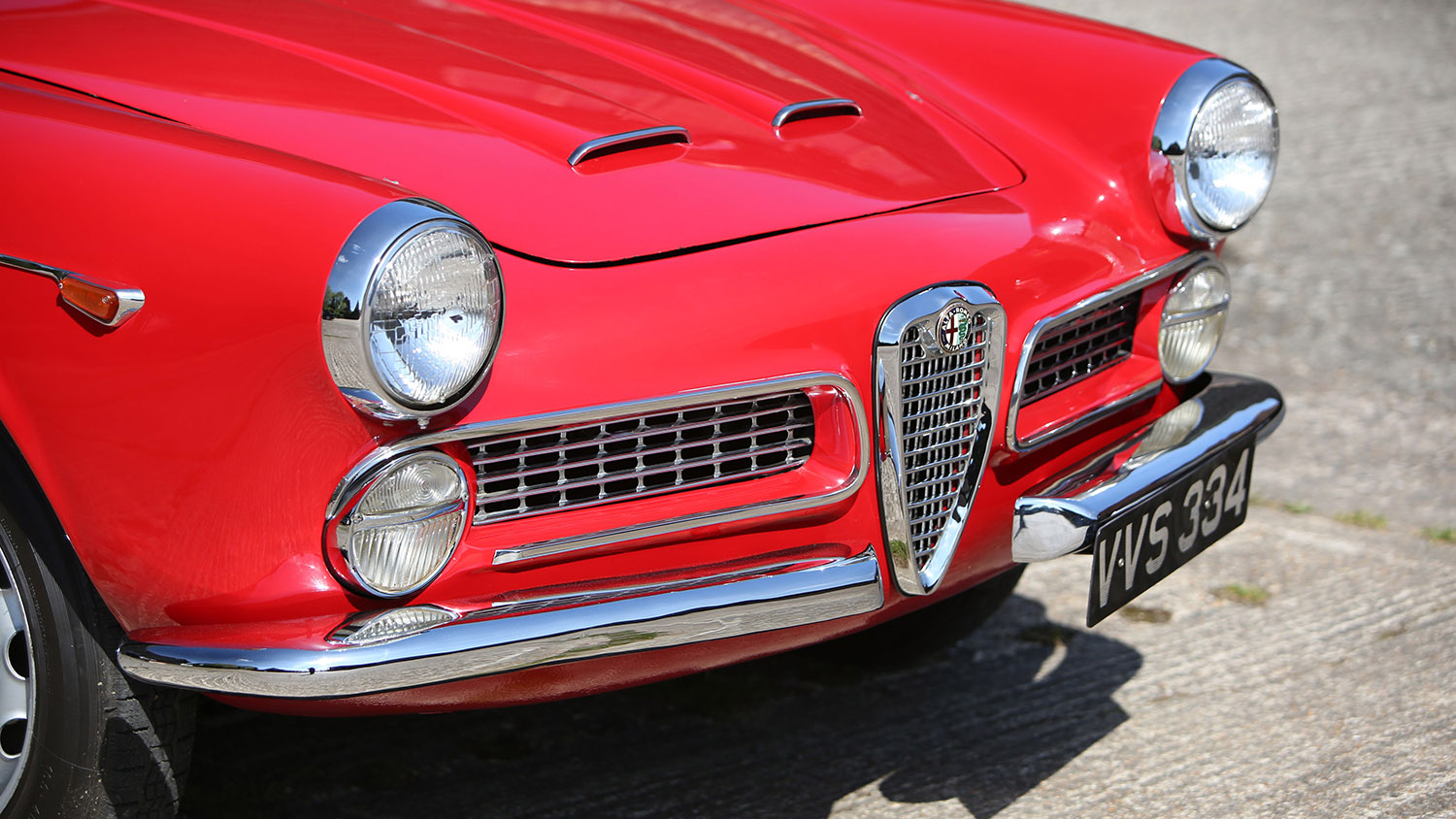
- A good chunk of 2000 Spiders were sold in the US and are obvious for their single rather than double chrome strips, lack of side vents and different bonnet vents
- Touring’s quirky one-off ‘Praho’ coupé was rejected in favour of Bertone’s more conventional alternative, this becoming the production Sprint
- Rarity means support for parts and trim is going to be more of a struggle than for equivalent Giuliettas or Giulias
- Like any ‘60s Alfa Romeo, corrosion is going to be an issue aesthetically and structurally and repairs won’t come cheap
- If not as well-known as other Alfa twin-cams the engine is at least proven, but make sure it checks out with all the usual inspections for leaks, cross-contamination of fluids, overheating and suchlike
- Most will have been through some manner of restoration but evidence of documented work by a respected specialist will provide important peace of mind
How does it drive?
The 2000 is a more mannered, substantial vehicle when compared with the lighter and feistier Giulietta and Giulia, which along with its premium price when new goes some way to explain its modest sales in period. If not lacking in power or charisma, the twin-cam four has its work cut out in the 2000, and the driving manners are more leisurely than sporty.
But not lacking in charm; the fully synchronised five-speed gearbox and decent brakes meaning it’s a more viable classic in modern driving conditions than many contemporaries. The more powerful Spider and Sprint have a little more to be going on with thanks their twin-carb motors, these revving more freely and delivering more on the sporty styling than the statelier Berlina saloon.
What’s good?
While deservedly popular, the Giulietta and Giulia tend to hog the attention when it comes to ‘60s Alfa Romeos, the subsequent rarity of the 2000 making it a somewhat less obvious choice, but one still brimming with all the charm and style of any Italian car of this period.
That will be appealing for those seeking something familiar enough to be recognisable, yet also different enough to stand out in classic car circles and properly appreciated by those in the know. And, perhaps, is a more mature choice and position as the thinking-person’s 60s Alfa. Whether people know what the 2000 is or not, the beautiful looks of both Spider and Sprint pluck the heart strings as powerfully as any of their better-known contemporaries.
What’s bad?
Even the most dedicated Alfa Romeo fan might struggle with the looks of the Berlina saloon, its mix of Italian design and Americana inspired detailing dating it somewhat. It’s also the least powerful 2000 and forever in the shadow of its more youthful Giulietta and Giulia cousins.
The Spider and Sprint make a stronger case for themselves and both are stunning in their own ways, but perhaps lack the sparkling performance that makes Giulietta and Giulia based equivalents so beguiling. Then and now a level of under-appreciation also makes the financial case for full restorations more difficult, given this could quickly cost more than the car is worth. And prove difficult, given the challenges of finding parts, replacement panels and trim.
Which model to choose?
While the Berlina has curiosity value there are probably more attractive Alfa Romeo saloons to put your money into, unless you score one in perfect condition at a price you can’t turn down! You’ll likely end up spending more, but a Spider like the one pictured here and previously sold by Bonhams|Cars at auction at the Festival of Speed presented by Mastercard, or a Sprint makes a much better case for itself, both as something to own and appreciate and as a relatively safe place to put your money if you can land a good one.
Which makes the more attractive choice will likely come down to taste and personal preference, given both have all the ‘60s Italian glamour you could wish for in an old Alfa Romeo. If exclusivity and rarity value are important, the Sprint’s more limited production run might tip the balance in its favour — assuming you can find one, of course!
Specifications – Alfa Romeo 2000 Spider
Engine
2.0-litre four-cylinder petrol
Power
115PS (86kW) @ 5,900rpm
Torque
152Nm (112lb ft) @ 5,700rpm
Transmission
Five-speed manual, rear-wheel drive
Kerb weight
c. 1,200kg
0-62mph
c. 14 seconds
Top speed
c. 110mph
Production dates
1958-1962 (total production, all versions)