
BUYER’S GUIDE
Alfa Romeo Spider Review
Pretty as a peach and with a lovely Alfa Romeo twin-cam under the bonnet, the Spider is as evocative as two-seat roadsters come. If you’re wondering about whether the Spider could be the right addition to your garage, then this helpful buyer’s guide is ideal for you. You’ll find information on everything from what the Alfa Romeo Spider is, to how much they could cost to insure, and even how easy it is to get hold of spare parts and accessories.

Engine
1.8-litre four-cylinder, petrol
Power
134PS (99kW) @5,500rpm
Torque
187Nm (137lb ft) @ 3,000rpm
Kerb weight
1,040kg
0-62mph
9 seconds
What is the Alfa Romeo Spider?
The Alfa Romeo Spider is a two-seat Italian roadster that became one of the most recognisable sports cars of the 20th century. Introduced in 1966 as the replacement for the Giulia Spider, it combined classic Alfa Romeo twin-cam engines, rear-wheel drive and elegant styling by Pininfarina. Production continued for an unusually long 27 years, making it one of the longest-running sports car designs ever produced.
The earliest cars are often referred to as the “Duetto”, famous for their rounded rear styling and appearance in the 1967 film The Graduate. Over the years, the Spider evolved through four distinct series, receiving updated styling, larger engines and improved equipment while retaining the same basic formula.
Today, the Spider is valued for its combination of attractive Italian design, engaging handling, charismatic engines and open-top driving experience. It remains one of the most accessible and usable classic Italian sports cars, with strong enthusiast support and excellent parts availability.
When was the Alfa Romeo Spider produced?
The classic Alfa Romeo Spider (Type 105/115) was produced from 1966 until 1993, with a small number of final commemorative models sold as 1994 model-year cars in North America. During its production run, more than 124,000 examples were built.
The car evolved through four main generations:
Series 1 “Duetto” (1966–1969)
Series 2 “Coda Tronca” (1969–1982)
Series 3 “Aerodinamica” (1983–1989)
Series 4 (1990–1993)
Its exceptionally long production life reflects the enduring appeal of the original design and Alfa Romeo’s willingness to continuously update the model rather than replace it outright.
Where was the Alfa Romeo Spider produced?
The Alfa Romeo Spider was built in Italy by Pininfarina. Early cars were assembled at Pininfarina’s facility in Grugliasco, near Turin, while later Series 4 models were produced at San Giorgio Canavese.
The close involvement of Pininfarina is a major part of the Spider’s appeal, as the famous design house was responsible for both the styling and much of the production process.
What changes were made to Alfa Romeo Spider over the years?
Although the Spider retained its basic layout throughout production, Alfa Romeo made a series of significant updates.
The original Series 1 “Duetto” (1966–1969) featured a distinctive rounded tail, often nicknamed “Osso di Seppia” (cuttlefish bone). It is generally regarded as the purest and most collectible version.
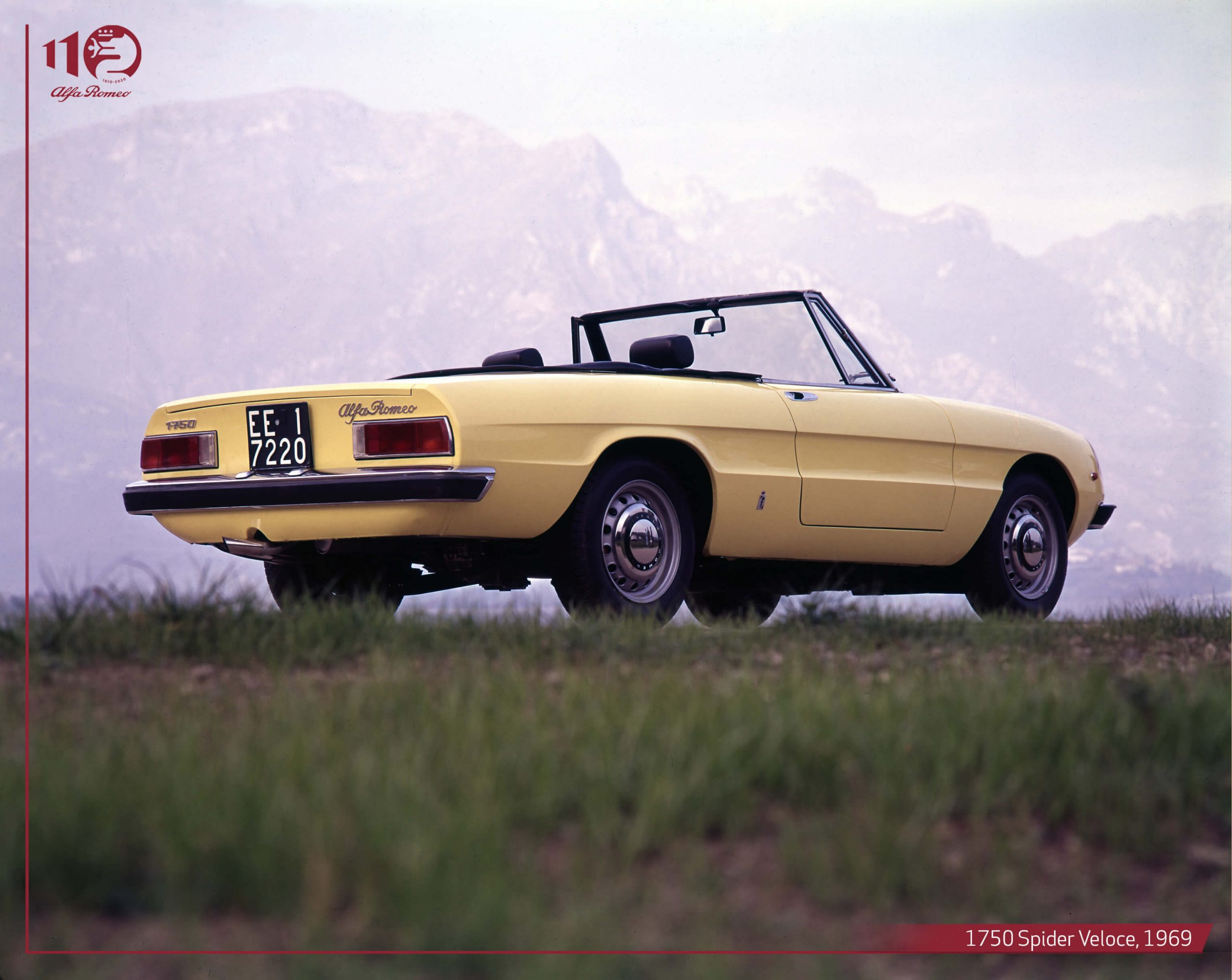
In 1969, Alfa introduced the Series 2 “Coda Tronca”, replacing the rounded rear with a chopped-off Kamm tail to improve aerodynamics. Styling revisions included new bumpers and a revised hood mechanism. Larger 1750cc and 2000cc engines later became available.
The Series 3 “Aerodinamica” arrived in 1983. It featured body-coloured spoilers, larger rubber bumpers and a more modern interior. These changes divided opinion, but improved practicality and market appeal.
The final Series 4, introduced in 1990, removed many of the Series 3’s add-on spoilers and returned to a cleaner appearance. Improvements included revised bumpers, updated trim, power steering on some models and modern safety features such as a driver’s airbag.
Throughout production, engine choices ranged from 1.3 to 2.0 litres, with fuel injection gradually replacing carburettors in many markets.
What are the common problems with Alfa Romeo Spider?
Rust is the biggest concern on any classic Spider and is generally more expensive to fix than most mechanical faults. Buyers should also check for evidence of accident repairs, as many cars have undergone restoration work during their lifetime.
Mechanically, the twin-cam engines are generally robust if maintained properly, but neglected cars can suffer from head gasket issues, oil leaks, worn timing components and fuel injection problems on later models. Cooling system maintenance is particularly important.
Gearboxes can become worn with age, particularly synchromesh on second gear. Suspension bushes, propshaft couplings and steering components also require regular inspection.
On later cars, electrical faults, worn convertible tops and water leaks are not uncommon. However, most issues are well understood by specialists and parts are generally available.
What should I look for when buying an Alfa Romeo Spider?
Condition matters far more than model year. A well-maintained Spider with documented history is usually a better purchase than a cheaper project car.
Inspect carefully for rust, accident damage and evidence of poor-quality repairs. Check panel fit, floorpans, sills, wheel arches and jacking points. The hood should operate smoothly and fit correctly.
Mechanically, ensure the engine starts easily, maintains good oil pressure and shows no signs of coolant contamination. The gearbox should shift cleanly and the clutch should operate smoothly. Test all electrical equipment, as age-related faults are common.
A specialist inspection is usually money well spent before purchase.
Where does the Alfa Romeo Spider tend to rust?
The most common rust areas include:
• Sills and rocker panels
• Floorpans
• Jacking points
• Wheel arches
• Lower door skins
• Front and rear valances
• Chassis rails and suspension mounting points
• Spare wheel well and boot floor
On later cars, water ingress around door seals can lead to corrosion at the bottom of the doors. Surface rust is common, but structural corrosion around the sills and floor can be expensive to repair properly.
As with most classic Italian cars, thorough rust inspection should be the first priority when viewing a Spider.
Common corrosive areas on the Alfa Romeo Spider

Sills

Boot floor and spare wheel well

Front crossmember and headlight surrounds
Alfa Romeo Spider Checklist
- The Alfa Romeo Spider was built in four main series over a life running from 1966 through to 1993
- The Series 1 – known variously as the boat tail, cuttlefish bone or, more evocatively, the Osso di Seppia – launched with a 1600 version of Alfa’s famous twin-cam, later replaced by the 1750 Veloce and joined by a 1300 Junior version
- The Series 2 ‘Kamm tail’ or Coda Tronca arrived in 1969 with heavily revised styling, top-hinged pedals, a more substantial interior and other changes; 1750 replaced by 2000 Veloce and Junior reintroduced as a 1600
- Series 3 launched in 1982 with more substantial rubber bumpers and a more prominent lip spoiler at the rear; engines comprised 2000 Veloce and 1600
- Series 4 in 1989 stuck with the same engines but revised with more modern looking body-coloured bumpers and features like power steering and air conditioning
- Fuelling varies according to where the car was first sold, with twin carburettors for most European markets and mechanical and then electronic fuel injection, first on American market cars but then more widely later in life
- Most are left-hand drive, right-hand drive Series 4s likely converted by third-party vendors here in the UK
- Engines are easily interchangeable so check history and bulkhead build plaque if you’re bothered about matching numbers originality – a marking within the square stamping at the front of the block will tell you what engine you have if you’re not certain, 1300s bearing a vertical line in a circle, 1600s a square, 1750s a triangle (with or without a dot) and 2000s a diagonal line across a circle
- Minor oil leaks around the engine or gearbox are not unusual and only a concern if the levels are low or the drips get serious
- Sagging engine mounts common and can cause fan to damage radiator over bumps
- Distinctive low-hanging sump susceptible to grounding so check for damage
- Rust is an ever present concern, especially in sills; check panel gaps and, if possible, jack car on one side to check doors open and close properly – if not the structure may be weakened
- Blocked B-pillar drains can cause rust from inside out
How easy is it to get hold of parts for the Alfa Romeo Spider?
Parts availability is one of the Spider’s strengths. Most routine service items, trim pieces, suspension components and engine parts remain readily available through specialists and enthusiast suppliers.
Body panels and certain rare trim items can be more expensive or harder to source, particularly for early Duetto models, but overall support is excellent by classic car standards. Many specialists can supply everything from replacement panels to complete interior kits.
Is the Alfa Romeo Spider classed as a classic car for vehicle insurance?
Yes, most Alfa Romeo Spiders are now considered classic cars by UK insurers. The newest examples were built in 1993, meaning even the youngest cars are more than 30 years old. As a result, they are widely accepted by specialist insurers for classic car policies, often including agreed-value cover, limited mileage options and access to specialist repair networks.
Eligibility criteria vary between insurers, but the Spider is generally regarded as an established classic rather than a modern vehicle.
How much does it cost to insure an Alfa Romeo Spider?
Insurance costs vary significantly depending on the driver’s age, location, driving history, agreed vehicle value and annual mileage, but Goodwood Classic Solutions offer specialist insurance for classic Alfa Romeos from just £105 per year.
Many Alfa Romeo Spiders qualify for specialist classic car insurance, which can be considerably cheaper than standard insurance when the vehicle is used on a limited-mileage basis and stored securely. As a guide, premiums can range from a few hundred pounds per year for experienced enthusiasts to substantially more for younger drivers or higher-value examples.
Individual insurers calculate premiums using vehicle value, driver profile and usage, and your policy can be further tailored when you get a quote with Goodwood Classic Solutions, as we can offer agreed value cover, discounts with limited mileage, and modification cover to ensure your Spider is properly protected no matter what.
What vehicle insurance bracket is the Alfa Romeo Spider in?
Insurance group ratings vary according to model year, engine size and market. Many classic Alfa Romeo Spiders are insured on specialist classic car policies rather than standard UK insurance groups, making agreed-value cover and limited-mileage policies more relevant than a conventional insurance group rating.
Give our team of experts a call on 01243 913 333 for more information, or get a quote online now.
How does the Spider drive?
For a mid-60s design the Spider is commendably modern in its engineering, with a zesty twin-cam engine of varying capacities, a five-speed gearbox, disc brakes all round and power, size and weight pretty much bang on the same as the first-generation Mazda MX-5 it so obviously influenced.
Only the recirculating ball steering and live axle date it but, like the MX-5, the Spider delights for its innocent sense of open-air fun, an engine that punches above its weight in terms of character and enthusiasm and a sense of Italian glamour to set it apart from the MGs and similar it competed with. True, the body can get a bit wobbly over bumpy roads, and it’s a car for enjoying the scenery and admiring glances more than on-the-doorhandles sportiness, but with the sun out and wind in the hair that’s just fine.
What’s good about the Alfa Romeo Spider?
With those gorgeous Pininfarina-styled lines and the romantic pull of that famous badge the appeal of the Spider is all too easy to understand, the engine under bonnet equally evocative for its distinctive twin-cam valve cover and classically Italian power delivery.
With plenty made over a 27-year production run, and many of those cars having lived lives in the Californian sunshine and escaped the worst of the rot afflicting many contemporaries, there’s a reasonable supply of cars to choose from as well, though the more desirable early models are getting expensive now.
The proven powertrains and running gear meanwhile ensure there’s a huge support network of expertise and parts to keep them running sweetly, while the interchangeability means opportunity to swap engines if you want a bit more poke.
What’s bad about the Alfa Romeo Spider?
Depending on who you speak to the Spider is either a proven and dependable classic or a stereotypically Italian nightmare of poor build quality and iffy reliability. The reality will very much depend on the quality of the car you view, so go with an open mind and prepare to move on to the next one if something looks awry.
Flexy bodies are a known feature of the Spider but serious structural corrosion can make this a more significant issue if you don’t do your due diligence when inspecting a car – blocked B-pillar drain holes that allow water to collect and rot the sills from the inside out are just one of many traps to catch the unwary. Given the endless market-specific modifications over the long production run it may be hard to establish or prove originality as well, if that matters to you. Most cars will be left-hand drive as well, which shouldn’t be a deal breaker for UK roads given how small it is.

What are the most popular specifications for the Alfa Romeo Spider?
The most sought-after Spider variants tend to be:
1600 Duetto (1966–1969) – the original and most collectible version.
1750 Veloce (1968–1971) – prized for its blend of performance and classic styling.
2000 Spider Veloce (1970s–1980s) – regarded by many owners as the best all-round classic Spider.
Series 4 2.0 (1990–1993) – the most refined and usable version for regular driving.
Most enthusiasts favour the 1750cc and 2000cc twin-cam engines thanks to their strong performance, characterful soundtrack and relative ease of maintenance.
What do people say they love about the Alfa Romeo Spider?
Owners consistently praise the Spider for delivering a classic Italian sports car experience without the intimidating costs associated with many exotic classics.
The styling remains a major attraction, particularly on early Duetto and Series 2 models. Enthusiasts also value the lively twin-cam engines, crisp manual gearbox and communicative rear-wheel-drive handling. The car feels engaging at sensible road speeds, making it enjoyable on modern roads.
Many owners also appreciate the Spider’s usability. Compared with many 1960s and 1970s sports cars, it offers good parts support, relatively straightforward maintenance and a strong global enthusiast community.
Above all, buyers often cite the sense of occasion. Whether parked at a classic car show or driven with the roof down on a summer evening, the Spider delivers a style and character that few rivals can match.
Who is the Alfa Romeo Spider recommended for?
The Alfa Romeo Spider is ideal for enthusiasts who want an engaging, characterful classic sports car with genuine Italian style.
It suits drivers who enjoy open-top motoring, weekend touring and hands-on ownership. The Spider is particularly appealing to buyers seeking something more distinctive than an MGB or Triumph, but without the running costs of a classic Ferrari.
It is less suited to those seeking modern refinement or maintenance-free ownership. Buy a good one, maintain it properly and the Spider offers one of the most rewarding classic motoring experiences available.
Which model of Alfa Romeo Spider to choose?
This will largely be dictated by your budget, and generally the older the Spider the more desirable and expensive it will be to buy. So, if you find the boat tail is as seductive as Anne Bancroft’s portrayal of Mrs Robinson expect to dig deep to secure one.
Debate rages about whether this is the best-looking, many preferring the chopped Kamm tail of the Series 2, especially in its earlier form with its delicate chrome bumpers. Given these were sold in greater numbers over a longer period this may be the more sensible option, the choice of engines also including the stronger feeling 2000 Veloce.
When it comes to the rubber-bumpered Series 3 these cars wear the look more convincingly than the leaden MG Bs of the same era and are better value, while the late Series 4 cars have their fans as well and can be had in converted right-hand drive form as well. Our pick? The revvier 1750 engine in the Series 2 body would seem the ideal combination of looks and driving manners but each to theirs.
Alfa Romeo Spider Specifications
Engine
1.8-litre four-cylinder, petrol
Power
134PS (99kW) @ 5,500rpm
Torque
187Nm (137lb ft) @ 3,000rpm
Transmission
Five-speed manual, rear-wheel drive
Kerb weight
1,040kg
0-62mph
9 seconds
Top speed
115mph
Production dates
1969-1971 (total production 1966-1993)