BUYER’S GUIDE
Citroën BX review
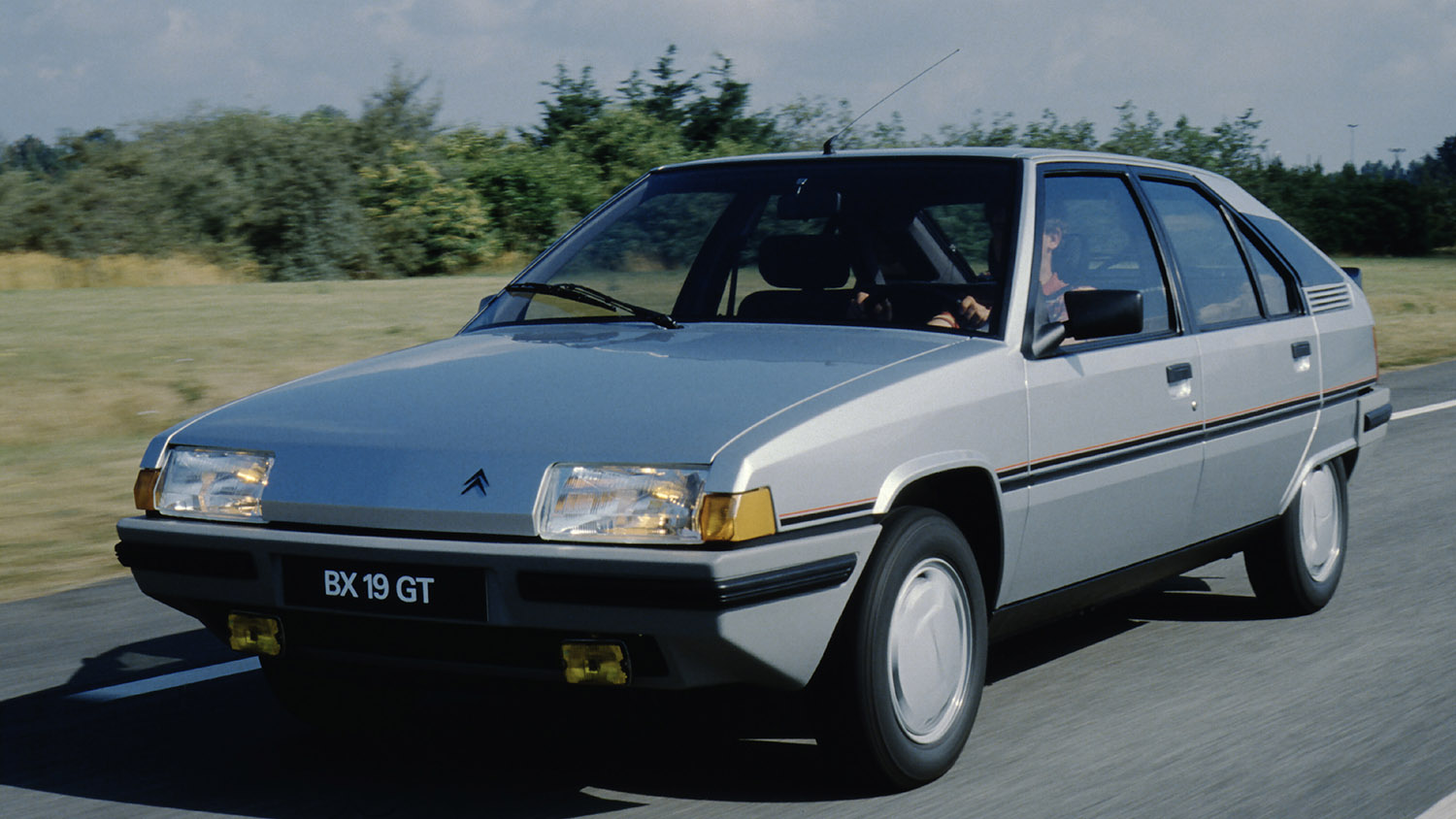
With its composite panels, Gandini-drawn lines and surprisingly sharp driving manners, the Citroën BX is peak 1980s cool…

Engine
1.7-litre four-cylinder diesel
Power
90PS (66kW) @ 4,300rpm
Torque
182Nm (134lb ft) @ 2,100rpm
Kerb weight
1,025kg
0-62mph
10 seconds
What Is It?
A typically Citroën response to the necessary evil of platform sharing with Peugeot, the BX stood apart for its distinctive Gandini-drawn lines, clever part-composite bodywork and — bien sûr — signature hydropneumatic suspension. All of which made it a rather more interesting alternative to the Ford Sierra that arrived around the same time. And a sharper steer than the wafty reputation might have suggested, not least in its more potent GT and GTi formats.
It even inspired a Group B rally variant, albeit not an especially noteworthy one! Back in the real world, the BX’s combination of slippery aerodynamics, light weight, comfort and powerful yet frugal turbodiesel engines made it a company car favourite for those willing to look beyond the regular Fords or Vauxhalls. That typical Citroën quirkiness still earns it fans to this day, and the BX makes for a distinctive and discerning modern classic.
Corrosive Areas

Door hinges

Sills and floorpans

Inner wings
Checklist
- BX unveiled in 1983 with a choice of two carb-fed petrol engines and five trim levels, the range quickly expanding to include a diesel, high-performance GT and then further derivatives like the estate and 4×4
- To the uninitiated the sheer number of models, trim levels and variants can be baffling, so do your research and narrow your search to basics like engine type or generation before getting too bogged down … or take a lucky dip!
- Where listed, the numbered suffix in the model name generally denotes engine size, BX 14 being a 1.4, BX 16 the 1.6, and so on
- 1986 facelift is worth paying attention to, given it introduced a number of upgrades, including a switch to a more conventional instrument cluster with regular dials — purists may prefer the trad Citroën ‘weighing scales’ display on early cars, though
- Clever weight-saving design means the bonnet (on most versions), bootlid and bumpers are all fibreglass or plastic
- Signature hydropneumatic suspension is core to the BX experience but, obviously, more complicated than traditional springs and dampers
- Check it all works, and inspect the hydraulic pump, spheres and lines for any leaks, corrosion or signs of damage
- Having manually selected the maximum ride height, make sure the car rises smoothly and without ‘stuttering’
- While in this position press the brake pedal and make sure the car remains level — if it doesn’t you may be chasing leaks or faulty valves in the combined hydraulic system
- Engines are generally proven and shared with other models, but head gaskets can be weak so check for the usual signs of failure
- Worn synchros not unusual, while transfer boxes on 4×4 versions can fail and are complicated to fix
- Composite panels can flatter to deceive and hide corrosion lying beneath or deeper in the car’s structure — inspect thoroughly inside, outside and underneath
How does it drive?
In the classic Citroën way there’s nothing conventional about the BX, and this includes the way it drives. To look at it you might expect the hydropneumatic suspension and reputation for comfort equal a soft and wallowy driving experience. Which is true to a point, given the classically French gearshift quality and low-geared steering on non-assisted versions. But the clever suspension has some tricks up its sleeve, the excellent wheel control and unexpected resistance to pitch and roll meaning above-average road-holding which, combined with the lack of weight, makes it surprisingly fun to drive.
True, your ‘80s company car contemporaries in their BMW 3 Series would have enjoyed a more traditionally sporting experience. But the effortless way a BX covers ground has charm of its own, while the GT and GTi versions offer a typically quirky alternative to more recognised hot hatches of the period, the 160PS (118kW) GTi 16V genuinely rapid.
What’s good?
Citroëns attract a passionate following, and of all the cars of its era the BX is still one of the most interesting and distinctive of its type. The fact it was styled by the same guy who designed the Countach is also kind of cool, and those with an appreciation for both aesthetics and engineering will find much to enjoy here. It’s also a practical, comfortable and efficient car to cover ground in, even by modern standards.
While the ‘hot hatch’ versions have obvious appeal, the BX is also unusual for its signature model to actually be the pioneering turbodiesel, which came later in the car’s life but quickly became a darling of the company car set for its combination of performance, range and efficiency. And if you really want to take the quirkiness to extremes there are intriguing rare-groove variants, including an estate, 4×4 and ‘Digit’ special edition with its oh-so- ‘80s digital dash.
What’s bad?
Like many mainstream cars of its type, the BX has slipped from common sight to extreme rarity without anyone really noticing. Meaning if you want one you’ll have to be prepared for a long search for a suitable car, at the right price and in the kind of condition you’d consider viable for long-term ownership.
To those ends, while the part-fibreglass construction means visible rust is less of an issue than it might be on others of its age, corrosion can take hold where you can’t see it and be difficult to address. While the shared engines and parts mean spares availability isn’t too bad on the mechanical side, it can be trickier when it comes to the more fiddly bits like interior and exterior trim details.
Which model to choose?
This will come down to personal taste as much as anything. The GT and GTi models have obvious appeal as left-field alternatives to more recognised hot-hatch stalwarts of the time, like the 205 GTi or Golf GTI. And that ‘if you know, you know’ vibe means you’ll get respect for your choice from the right people.
It’s a less obvious pick but a late turbodiesel also serves as an interesting period piece, as well as a satisfying car to drive and own for its discreet turn of speed, style and long-distance comfort. Availability will likely be the primary deciding factor, though, and certainly these later models are (relatively) more numerous than the perhaps more purist early models.
Specifications – Citroën BX TGD Turbo
Engine
1.7-litre four-cylinder diesel
Power
90PS (66kW) @ 4,300rpm
Torque
182Nm (134lb ft) @ 2,100rpm
Transmission
Five-speed manual, front-wheel drive
Kerb weight
1,025kg
0-62mph
10 seconds
Top speed
112mph
Production dates
1983-1994 (total production, all variants)