BUYER’S GUIDE
Ford Capri review
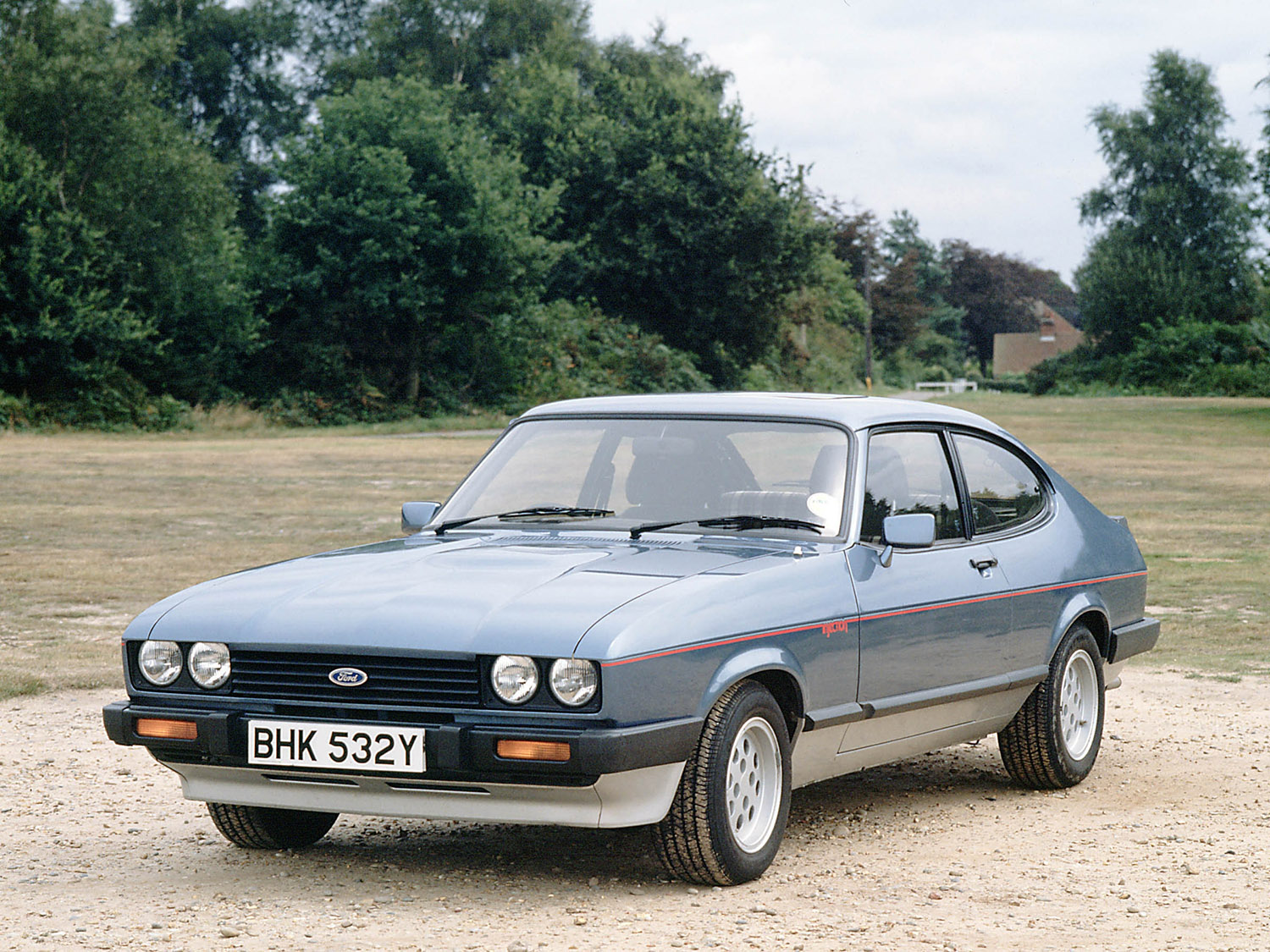
Sold as ‘The Car You Always Promised Yourself’, the Ford Capri is an iconic two-door coupé with an enduring popularity. If you’re thinking about buying a Capri, then this buyers guide contains all the information you’ll need to help you find the best Ford Capri out there.

Engine
2,792cc V6 petrol
Power
160PS (118kW) @ 5,700rpm
Torque
221Nm (163lb ft) @ 4,300rpm
Kerb weight
1,170kg
0-62mph
8.3 seconds
What is the Ford Capri?
Launched in 1969, the Ford Capri was designed to bring the appeal of the Ford Mustang to European buyers at a more affordable price. Whether or not it achieved that lofty goal is debateable, but the Capri definitely combines sporty styling with a wide range of engines, allowing buyers to choose anything from an economical four-cylinder to powerful V6 performance.
Nearly 1.9 million Capris were built during its 17-year production run, making it one of Europe’s most successful sports coupés, and the Capri is still highly regarded today.
Models like the 2.8 Injection, RS2600, RS3100 and Brooklands 280 continue to attract interest from enthusiasts, with many buyers drawn in by the Capri’s distinctive styling, simple mechanicals, rear-wheel-drive layout and strong club support.
When was the Ford Capri produced?
The Ford Capri was produced between 1969 and 1986, with a few different model changes over that time. The first-generation Mk1 Capri launched in early 1969, and was then followed by the Mk2 in 1974, and finally the facelifted Mk3 which was launched in 1978 and saw out production, which continued until 19 December 1986.
What Changes Were Made to the Ford Capri Over the Years?
The Capri evolved through three main generations:
• The Mk1 (1969 to 1973),
• The Mk2 (1974 to 1978), and
• The Mk3 (1988 to 1986).
The Mk1 of the Ford Capri established the formula and offered a wide range of four-cylinder and V6 engines, and this initial mark received an update in 1972 which revised the styling, improved the suspension, added larger rear lights and new engine options.
The Mk2 which followed in 1974 brought a much more impactful practical change – a hatchback tailgate which added versatility by replacing the separate boot compartment. Improved sound insulation, visibility, and driver comfort were all welcomed, and luxury trim was offered, too.
The Mk3 was introduced in 1978, and was essentially a heavily-revised Mk2 which sported a sleeker nose, improved aerodynamics, reworked headlights and updated interior options.
Ford introduced the highly popular 2.8 injection engine in 1981, which replaced the older 3.0 V6 in many markets. This fuel-injected V6 became one of the most desirable Capri models thanks to its improved performance and drivability.
Throughout production, Ford continually updated engines, trim levels and performance variants, culminating in special editions such as the Tickford Turbo and Brooklands 280.
What Are Some Common Problems with Ford Capri?
Rust is the biggest issue facing the Ford Capri, with common corrosion points including the suspension turrets, sills, floorpans, A-pillars, chassis rails, rear spring mounts, wings and boot floors.
Mechanical components are generally durable and straightforward to repair, but neglected bodywork restoration can be expensive. Age-related issues such as worn suspension, tired brakes, electrical faults and leaking seals are also common, but are also relatively simple to resolve. Buyers should prioritise structural condition over cosmetic appearance.
What Should I Look for When Buying a Ford Capri?
As mentioned above, it’s important to focus primarily on body condition. Rust repairs, if required, can easily exceed the value of the vehicle. Carefully inspect suspension turrets, sills, floorpans, chassis rails, A-pillars, inner wings, rear arches and the boot floor. Check that previous repairs have been carried out properly rather than hidden with filler.
Mechanically, it’s advised that you check the engine for excessive smoke, leaks and poor running. Check gearbox operation, clutch condition, steering play and suspension wear. Verify that electrical equipment functions correctly and that the vehicle has a documented history.
Originality can significantly affect values, particularly on performance models. Matching numbers, factory trim and period-correct specifications are often highly desirable. A specialist inspection is strongly recommended before purchase.
Common areas of corrosion on the Ford Capri

A-pillars, front scuttle and bulkhead

Front suspension turrets

Sills
Ford Capri Checklist
- Mk1 Capris are obvious for their raised trim line along the side and the two fake air intakes ahead of the rear wheel; post 1971 facelift cars can be identified by their bigger rear lights
- Homologation RS2600 and RS3100 are rare and highly collectable; plenty of standard cars were dressed up with the same quad-headlight look both in period and subsequently and can offer similar thrills for a lot less money if you’re not so fussed about matching numbers originality
- Vinyl roofs, louvred rear windows, rear spoilers and more were all among the popular trim upgrades available in the many and various Capri special editions
- Launched in 1974, the Mk2 loses the fake rear vents and gains a hatchback tailgate; engines range from 1.3 Crossflows to 1.6 and 2.0 Pintos, along with various sizes of V6 engine
- The Capri used both ‘Essex’ and ‘Cologne’ vee engines in various configurations, the former more commonly powering the many and various 3.0-litre V6 variants over all three generations before being phased out in 1982 in favour of the fuel-injected 2.8-litre Cologne
- Most Capris are four-speed manuals, though a three-speed automatic was popular with buyers of the more luxury focused Ghia models and some later 2.8s got five-speed transmissions
- Ford offered two stages of ‘X-Pack’ packages for 3.0-litre versions of the Mk2 and Mk3, some as fully finished cars or as retrofit options; parts included uprated suspension, widebody arch extensions, Bilstein dampers and, in top Series X trim, a triple-carb conversion for more power
- Original X-Pack cars will be valuable; again standard ones may have been retrospectively modified and are more accessible if you want the look for less money
- Four-cylinder engines are standard Ford units and generally tough and dependable, though look for the usual signs of overheating, smoke, emulsified oil and obvious rattles
- Both V6s are generally tough and dependable, though can suffer from warped cylinder heads and blown gaskets; plastic timing gears can fail and are often upgraded with sturdier steel replacements, which are noisier but tougher
- Interior trim can be very difficult to get hold of so even a rough car with well-preserved cabin could have value
- Rust can occur anywhere but is most critical in structural areas like suspension turrets, A-pillars, front bulkhead, sills, rear suspension mounts and boot floor
How easy is it to get hold of parts for the Ford Capri?
You’ll generally be able to find parts and accessories for the Ford Capri quickly and easily, as it’s got such a strong following of clubs and enthusiasts.
Most service items, brakes, suspension components, trim pieces and engine parts are available through specialists and owners’ clubs, but original body panels, interior trim and rare performance-model components can be expensive or difficult to source.
Overall, the Capri remains one of the easier classic Fords to maintain.
How does the Ford Capri drive?
Exactly as you’d expect, which is to say entirely in keeping with its down-to-earth, no-nonsense image. Ford’s knack for making sure even its cheaper models handle well was further improved for the Capri, the low-slung driving position and long bonnet making it feel sporty before you even turn a wheel.
Independent McPherson strut suspension up front and a leaf-sprung live axle out the back are nothing fancy but the sharp steering, precise gear shift and natural balance are all there to be enjoyed. Ford developed all manner of go-faster upgrades for suspension, brakes and powertrain for the faster models to make sense of the extra power of the V6 models.
With upwards of 140PS (103kW) depending on the model, these are obviously the ones people go for today, the fruity growl of the engine and power to get the rear end swinging all add to the fun. The smaller 1.3 and 1.6-litre engines are perhaps a little weedy to make serious progress but 2.0-litre models can entertain if a V6 is out of reach.
What’s good about the Capri?
Iconic looks, inherent mechanical simplicity, fun driving manners and space in the back to seat a couple of extra passengers make a Capri an excellent weekend classic to enjoy with all the family. By the time you get to the V6 models you’ve got enough performance to keep pace with more modern cars as well, while the enduring popularity means a wide community of fellow owners for sharing knowledge and a guarantee of strong residual values for a well-maintained example.
While navigating the many and various generations, special editions and model year updates can appear intimidating, that does mean you get a huge range of cars and styles to choose from, whether you crave-vinyl roofed ‘70s nostalgia, pared-back motorsport manners with the RS models or prefer the unadorned simplicity of the standard models.
Mechanically Capris are pretty simple and tough as well, given the proven Ford engines and other components. As such running one needn’t break the bank, or be beyond the wit of a driveway maintenance with a few basic tools and a bit of DIY nous.
What’s bad about the Capri?
It will come as little surprise to hear that rust is going to be your main consideration when looking at a Capri to buy. This can appear anywhere on the body and will be obvious enough but, as ever, it’s what’s going on under the skin that can really cause issues, and all three generations are vulnerable to serious structural rot.
Common areas to look at include the front suspension turrets in the inner wings, the front scuttle and A-pillars (and bulkhead beneath them) along with the inevitable sills and floorpan. Rear suspension mounts can also go, likewise fuel tanks and boot floors.
While tatty bodywork can be repaired, perhaps of greater concern is the lack of interior trim parts, meaning a rough car with a good interior may yet be worth saving for that reason alone. Covetable models like RS variants, 3.0 S and others are also collectable but given the ease of engine swaps and other upgrades you need to perform due diligence to ensure it’s original and not a conversion if you’re paying the premium.
Is the Ford Capri Classed as a Classic Car for Vehicle Insurance?
Yes, irtually all surviving Ford Capris are now considered classic cars by UK insurers, as production of the Capri ended in 1986. This means that even the newest examples are now at least 40 years old, which falls well within the generally accepted parameters for a classic car in the UK.
You can get specialist insurance for your Ford Capri from Goodwood Classic Solutions from just £110 per year, which can include agreed value cover, as well as discounts for limited mileage policies, and specialist modification cover to ensure that your Capri is properly covered, even if it’s had some mods or upgrades. Many Capri owners benefit from lower premiums than equivalent modern performance cars, provided the vehicle is used responsibly and stored securely.
Give our team of experts a call on 01243 913 333 or you can get a quote online now, to see how much we can save you on specialist insurance tailored to you and your Ford Capri.
What are the most popular specs for the Ford Capri?
Both the ‘standard’ and Special versions of the Ford Capri 2.8 Injection are really popular with collectors and drivers, as well as the 3.0 S. There are a number of special editions and limited production models, too, including:
The Ford Capri Brooklands 280
The Ford Capri 280 Brooklands is a rare and highly sought-after special edition of the Ford Capri, created in late 1986 to be a dignified farewell to the Capri at the end of its storied 18-year run.
The Ford Capri RS2600
Ford created just over 3,500 examples of the RS2600 Capri between 1970 and 1973. This special model is a high-performance, homologation-special sports coupe created specifically to make the Capri competitive in the top Division 3 category of FIA Group 2 touring car racing.
The Ford Capri RS3100
The RS3100 is an exceptionally rare, hand-built “homologation special”model of the Ford Capri, with only 250 being road-going RS3100’s being created in late 1973 by Ford’s Advanced Vehicle Operations (AVO), to qualify the model for competition in the over-3-litre Group 2 class for the 1974 European Touring Car Championship.
The Verdict on the Ford Capri
The Ford Capri can be ideal for anyone looking for an affordable and usable classic sports coupé.
It appeals to enthusiasts who enjoy classic rear-wheel-drive cars, DIY maintenance and a huge community of owners’ clubs. The Capri is particularly suitable for drivers wanting a classic with straightforward mechanicals and a wide choice of engine options. However, buyers should be prepared for ongoing maintenance and careful rust prevention.
Well-maintained examples can provide an engaging ownership experience while offering strong classic-car appeal and potential long-term collectability.
Which Capri to choose?
Launched in 1969, the Mk1 has the daintiest looks with the small, Escort donated rear lights and single headlights while a 1971 facelift saw bigger lenses all round and a revised engine line-up. Regular V6s are appealing, the V4s have curiosity value and the RS2600 and 3100 are proper collectable rarities.
The 1974 Mk2 stripped off some of the chintzier styling elements like the fake rear vents and the combination of the cleaned-up styling and hatchback rear tailgate are welcome modernising touches but the post-1978 Mk3 is perhaps the best looking thanks to the more aggressive quad-headlight front end and sharper detailing.
Of these the 2.8 Injection is probably the most coveted, especially in Special trim with the five-speed gearbox, Recaro seats and standard limited-slip differential. With around 160PS (118kW) these have enough grunt to make sense of the junior muscle car looks and will always put a smile on your face. This all comes at a price, though, and if we were on a budget a 2.0-litre would just about cut it.
Specifications – Ford Capri 2.8 Injection Special
Engine
2,792cc V6 petrol
Power
160PS (118kW) @ 5,700rpm
Torque
221Nm (163lb ft) @ 4,300rpm
Transmission
Five-speed manual, rear-wheel drive
Kerb weight
1,170kg
0-62mph
8.3 seconds
Top speed
131mph
Production dates
1981-1986 (1969-1986 for full production)