BUYER’S GUIDE
Lamborghini Diablo review
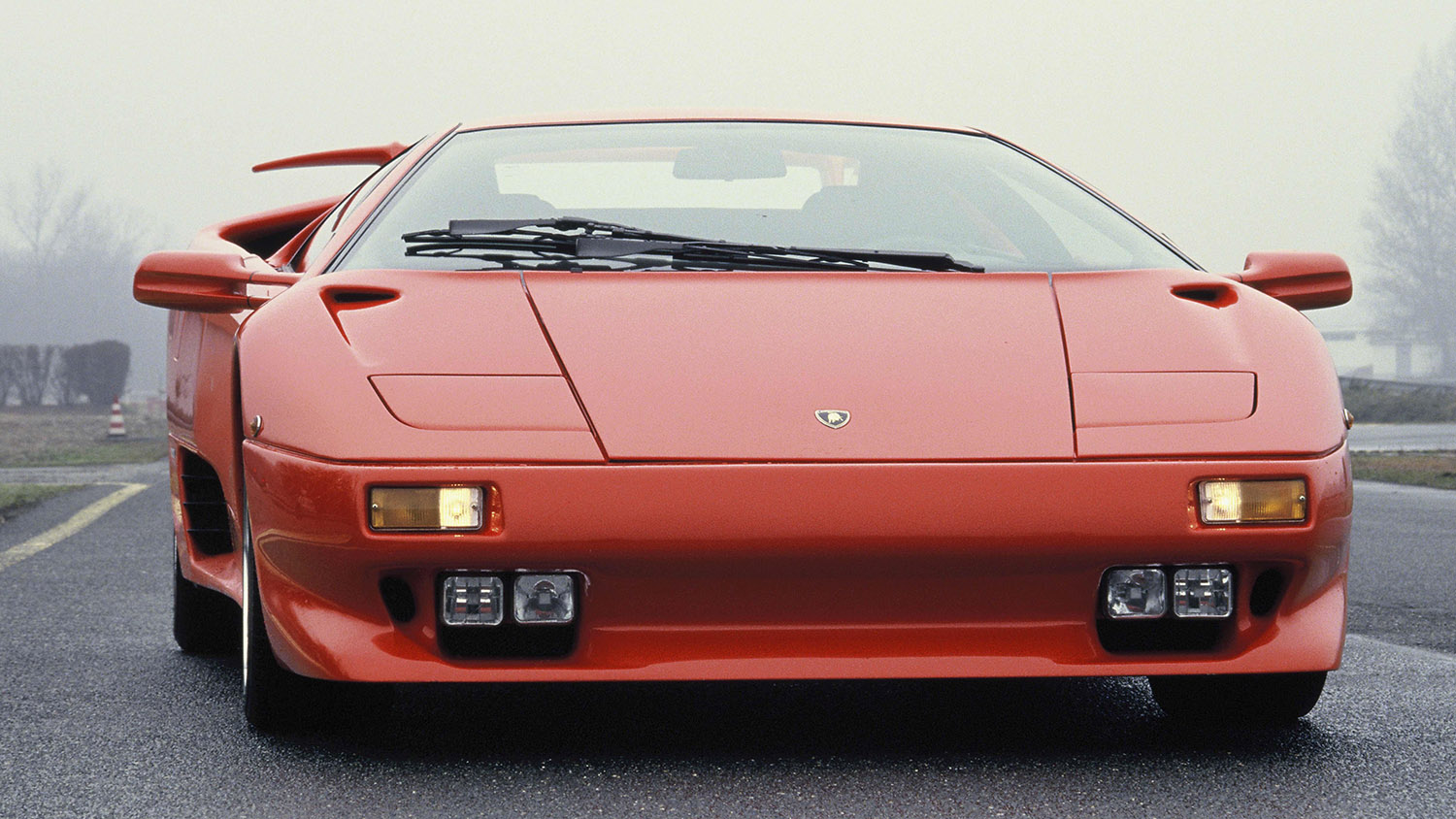
The devil apparently has the best tunes — in the Diablo he may have the best Lamborghini, too!

Engine
5.7-litre V12 petrol
Power
520PS (336kW) @ 7,100rpm
Torque
580Nm (428lb ft) @ 5,900rpm
Kerb weight
1,450kg
0-62mph
4.0 seconds
What Is It?
As fascinating for what it represents for Lamborghini as it is intoxicatingly wild to drive, the Diablo is finally stepping out of the shadows of its Miura and Countach predecessors to stand as their equal among the brand’s iconic V12 models. All have their own fascinating origin stories, but the fact the Diablo lived through Lamborghini’s transition from private ownership to its modern era under Audi stewardship gives it additional interest.
Its mechanical evolution from raw supercar into something relatively more civilised and usable was symbolic of the company’s increasing sophistication and maturity under German ownership without diluting the excitement of its all-Italian origins. Expensive to buy, potentially ruinous to run and increasingly valuable, the Diablo’s reputation seems only to grow with each passing year!
Corrosive Areas

Sills

Front luggage compartment floor

Petrol filler surround
Checklist
- Work started on the Diablo in the mid-1980s, Gandini’s original design softened by new owners Chrysler before the launch in 1990
- The more cab-forward stance was new but the V12 had roots in that used in the Miura and Countach, while composite and aluminium panels covered a traditional steel spaceframe
- Engine an evolution of the original Lamborghini V12, initially in 5.7-litre form and just under 500PS (368kW), later growing to a 6.0 and knocking on 600PS (441kW) in some models
- Early Diablos are raw and difficult to drive, with a heavy clutch, non-assisted steering and zero driver aids
- All-wheel drive VT version launched in 1993 was relatively more civilised, with lighter controls, electrically adjustable damping and more predictable handling
- 1994’s SE30 went the other way, with roof vents, more power and stripped out cabin, the Jota version super-rare and the most powerful Diablo of all
- Diablo SV followed a year later, with big wing, bold graphics and slightly more usable character, a targa-topped roadster Diablo joining the range later the same year
- Diablo had its first major update in 1999 following Audi’s buy-out, fixed lights replacing the pop-ups, power increasing and the interior much-improved
- Wild 6.0-litre GT featured big roof vent and more power, this engine then carried over into the late-model 6.0 versions, these with more obvious Audi influence and quality
- Engines considered tough with proper care, though this requires commitment to regular servicing and oil changes, none of which comes cheaply
- Early 5.7s had hydraulic cam chain tensioners which can eventually snap the chain — manually adjustable ones from later cars commonly retrofitted
- Early clutches heavy and wear out fast, while hefty shift can lead to snapped gear selectors
- Aluminium and composite panels don’t rust but the steel spaceframe beneath can, so check thoroughly for corrosion
- Increasing values supported by Lamborghini’s Polo Storico programme, ranging from parts supply to certification of originality and condition, and full restorations
- Later cars considered more driveable and refined all things relative, but extra electronics add complexity
How does it drive?
Big, brutish and unashamedly intimidating, the Diablo’s reputation more than lives up to its name, especially in its original early 90s form. Non-assisted steering, a heavy clutch and muscular gearshift combined with the massive on-road footprint and a reputation for snappy, on-limit handling all add to the drama, though the introduction of all-wheel drive, power steering and a lighter clutch make the later VT a little more manageable and the driving experience became increasingly more civilised post-Audi acquisition.
It’s still all things relative, though, and a Diablo remains a committed driving experience, albeit a suitably thrilling one and fascinating for the way it bridges the gap between traditional, old-school supercars and their more technically sophisticated successors. For the full hair-tingling experience, the more powerful rear-wheel drive versions like the SE30, SV and GT deliver a stronger adrenaline hit, all-wheel drive variants a little more usable though still unapologetically Lamborghini in their manners.
What’s good?
Just as the Miura was the poster child for the 70s and the Countach acted as the same for 80s, the growing nostalgia for 90s culture matches the increasing appreciation for the Diablo’s personification of the era’s excesses, perfectly symbolised by the iconic appearance of Jay Kay’s SE30 in the gloriously self-indulgent video for Jamiroquai’s Cosmic Girl.
If perhaps more heavy-handed than contemporaries from Ferrari and Porsche, the Diablo’s performance remains impressive to this day, and its ability to turn heads is still unmatched thanks to the kerbside theatre of its scissor doors, the outrageous looks and thunderous V12. The very fact it’s not a car for the faint of heart or those seeking to fly under the radar is, for fans, exactly the point as well.
What’s bad?
This will very much depend on your view of Lamborghinis in general, and for cynics the Diablo’s excesses seemingly confirm worst fears of shouty attention-seeking taking precedence over usability or driving manners. Fans will, of course, argue that’s exactly what makes it so appealing! Practically speaking, a Diablo is as intimidating as an ownership proposition as it is to drive, and running costs are going to be hefty before you even consider ongoing repairs, restoration or similar.
Values are on the up as well, and the days of the Diablo offering a relatively affordable route into V12 Lamborghini ownership are long gone, growing appreciation meaning the collectable versions are now up into seven figures. Pre-Audi era examples might appeal for their more purist vibe, but this also comes with pre-Audi build quality so there’s a degree of buyer beware to factor in there.
Which model to choose?
Without wishing to sound vulgar, how deep are your pockets? While there’s no such thing as a ‘cheap’ Diablo these days, pre-facelift VTs are relatively numerous and offer a nice balance between the original style and improved driveability of later models, true fans meanwhile preferring the more numerous pop-up light rear-wheel drive model, the purity of early models offset against their heftier driving manners.
Beyond that, if money is less of an object the more extreme SV has obvious appeal and arguably greater investment potential, these qualities amplified further when you get to the level of rarities like the Jamiroquai spec SE30, GT, or even the truly extreme GTR or Jota versions. If you fancy all this with the wind in your hair, the Diablo was also the first of the top-flight V12s to offer a factory convertible, the targa-topped Roadster versions putting a different twist on the same formula.
Specifications – Lamborghini Diablo SE30 (1994)
Engine
5.7-litre V12 petrol
Power
520PS (336kW) @ 7,100rpm
Torque
580Nm (428lb ft) @ 5,900rpm
Transmission
Five-speed manual, rear-wheel drive
Kerb weight
1,450kg
0-62mph
4.0 seconds
Top speed
207mph
Production dates
1990-2001 (total production, all versions)