BUYER’S GUIDE
Land Rover Series III review
Classic Landie looks with more modern engines and conveniences, could the Series III be the pick?

Engine
2.3-litre four-cylinder petrol
Power
70PS (52kW) @ 4,000rpm
Torque
159Nm (117lb ft) @ 2,000rpm
Kerb weight
c. 1,850kg
0-62mph
Gradually
What Is It?
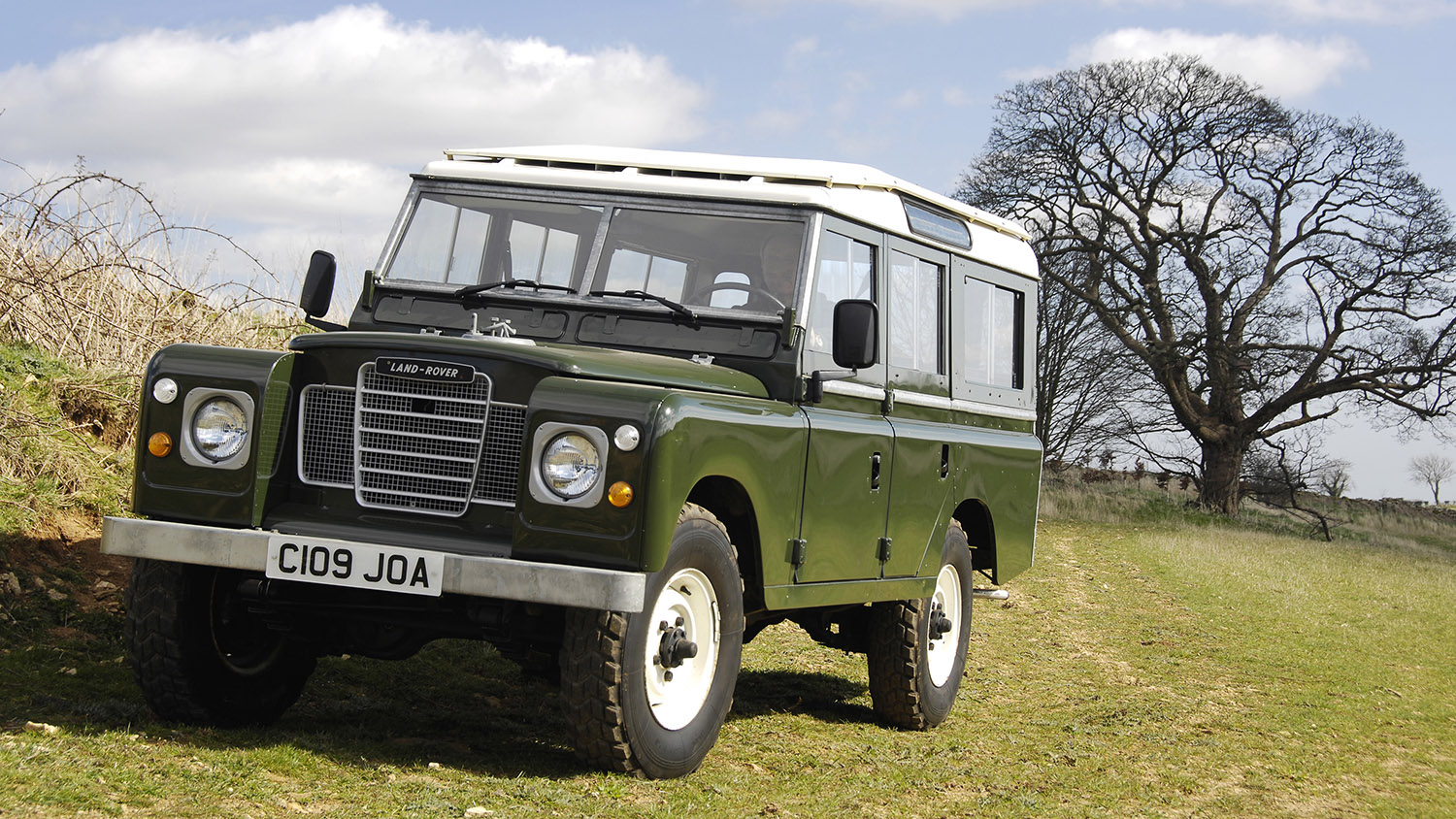
Perhaps once the under-appreciated of the ‘Series’ Land Rovers, the 1970s vibe of the third iteration looks to be coming of age at last, the classic two-tone blues or greens over white steel wheels an iconic look revisited for the modern Defender. While it still has the genetic links back to the original, the Series III gained some significant advances in driveability, performance and style in terms of a V8 engine option and the iconic County station wagons.
Whether you pick one of these or a more trad-style canvas-backed farmer-spec version with straw in the load bed, you’re very much in ‘proper Land Rover’ territory, with all the good and bad that brings!
Corrosive Areas

Anything not made from aluminium!

Chassis legs, ‘dumb irons’, outriggers and crossmember

Front bulkhead
Checklist
- Series III launched in 1971 as an evolution of the Series IIa, taking on the new look introduced in later versions of that model with the wing rather than grille-mounted lights
- Obvious identifiers include the plastic grille and square external door hinges
- The interior was also significantly modernised, with a more conventional plastic instrument binnacle and full-width crash pad on the dash
- Mechanically, the existing 2.3-litre petrol and diesel engines were carried over, along with the 2.6-litre straight-six petrol, the gearbox now fully synchronised and with a bigger clutch
- The Range Rover’s powertrain was fitted in 1979 to create the Stage 1 V8, this identifiable by its flat grille; most were 109-inch chassis versions but a handful of short-wheelbases were also built for export
- V8 is desirable but thirsty and detuned compared with the Range Rover application
- County station wagon launched in 1982 with better seats, tinted glass, a variety of seating configurations and in iconic Russet Brown or Masai red with white stripes liveries — these are now very desirable in all configurations and command a premium
- All engines considered tough when looked after properly but make the usual checks for cross-contamination of fluids, smoke and overheating, especially on the V8
- Later four-cylinder engines got a smoother and tougher five-bearing crank
- Interchangeability of parts means engine swaps are relatively common, which is only an issue if you’re chasing originality
- Major oil leaks are worth looking out for but the odd dribble is part and parcel of old Landie ownership — if there’s no oil dripping out of the transmission or diffs that’s time to start worrying!
- Check the operation of the low-range and diff lock controls in any prospective purchase
- Any original chassis should be thoroughly checked for corrosion, which can occur anywhere
- Pay particular attention to the front chassis legs (‘dumb irons’ in the vernacular), suspension and spring mounting points, outriggers and rear crossmember
- While the body panels are aluminium the steel structure within can rot, the front bulkhead especially prone and very expensive to address
How does it drive?
No Series Land Rover is exactly easy to drive, the combination of challenging ergonomics, heavy controls and modest on-road performance (putting it politely) all combining into a committed choice. Saying that, the Series III makes a case for being the most usable of them all, relatively speaking.
The gearbox still demands a balance of muscle and finesse, even with the addition of a synchromesh; the four-cylinder cars are painfully slow by modern standards and, even at their best, the steering and brakes are best described as vague. For fans this is all part of the traditional Landie experience. And it goes without saying a Series III is still a formidable off-roader, in its element when the going gets tough.
What’s good?
The moment where a Series III was the bargain choice of the trad Land Rovers has perhaps passed but, all things relative, it’s still the most accessible of the early models. It’s also the most versatile, whether you go for a workhorse flatbed or more civilised (relatively) County station wagon with its comfier seats and all-round usability.
Like any Series Land Rover, it’s basically just a big Meccano set, and much of the inevitable tinkering is within the scope of a keen home mechanic. Interchangeability of components and a huge support network of fans, specialists and parts means it’s a relatively simple vehicle to keep running, even if it’s an involved ownership experience. Values are likely only going one way, too.
What’s bad?
Most Series IIIs will have 50 years’ of hard use under their belts now and have passed through many owners of varying levels of commitment and expertise. That and the fact many will have led tough former lives as working vehicles here or overseas means a legacy of repairs, restorations, bodges, modifications and the rest.
This will all be part of the charm for many, but your chances of scoring a clean and original one are slim, opportunities to land an otherwise tempting looking example concealing all manner of horrors is dangerously high. While mechanically simple, tough and dependable old Land Rovers can still end up costing a fortune to put right, especially when it comes to corrosion on the chassis or non-aluminium parts of the bodywork.
Which model to choose?
As ever, ‘the best you can afford’ is always a sound starting point, but it also helps to have an idea of what you desire out of your old Landie. If you want tough and simple with a view to meandering down the back roads and perhaps dabbling with a bit of greenlaning, a basic, short-wheelbase canvas-backed or hardtop commercial with a four-cylinder petrol or diesel is a sound starting point. Some would argue the more battered looking the better if you’re doing it properly.
Going the other way, if you want something able to pass as a usable family or road car a long-wheelbase County station wagon has a level of sophistication and versatility. V8 ones are thirsty and not as fast as you might have hoped but with have more useful levels of performance. Expect to pay quite a bit more for the privilege, mind.
Specifications – Series III County Station Wagon 109-inch
Engine
2.3-litre four-cylinder petrol
Power
70PS (52kW) @ 4,000rpm
Torque
159Nm (117lb ft) @ 2,000rpm
Transmission
Four-speed manual, selectable four-wheel drive with low-range
Kerb weight
c. 1,850kg
0-62mph
Gradually
Top speed
c. 60mph
Production dates
1971-1985 (total production, all variants)