
BUYER’S GUIDE
Mazda MX-5 (NA) Review
The car inspired by classic roadsters, the MX-5 is now a bona-fide classic itself. If you’re looking at picking one up yourself, then this buyers guide is here to help you get to grips with the different options available, what to look out for when viewing an MX-5, and how to protect your investment with the right classic car insurance.

Engine
1.6-litre four-cylinder, petrol
Power
115PS (86kW) @ 6,500rpm
Torque
135Nm (100lb ft) @ 5,500rpm
Kerb weight
955kg
0-62mph
8.8 seconds
What is the Mazda MX-5?
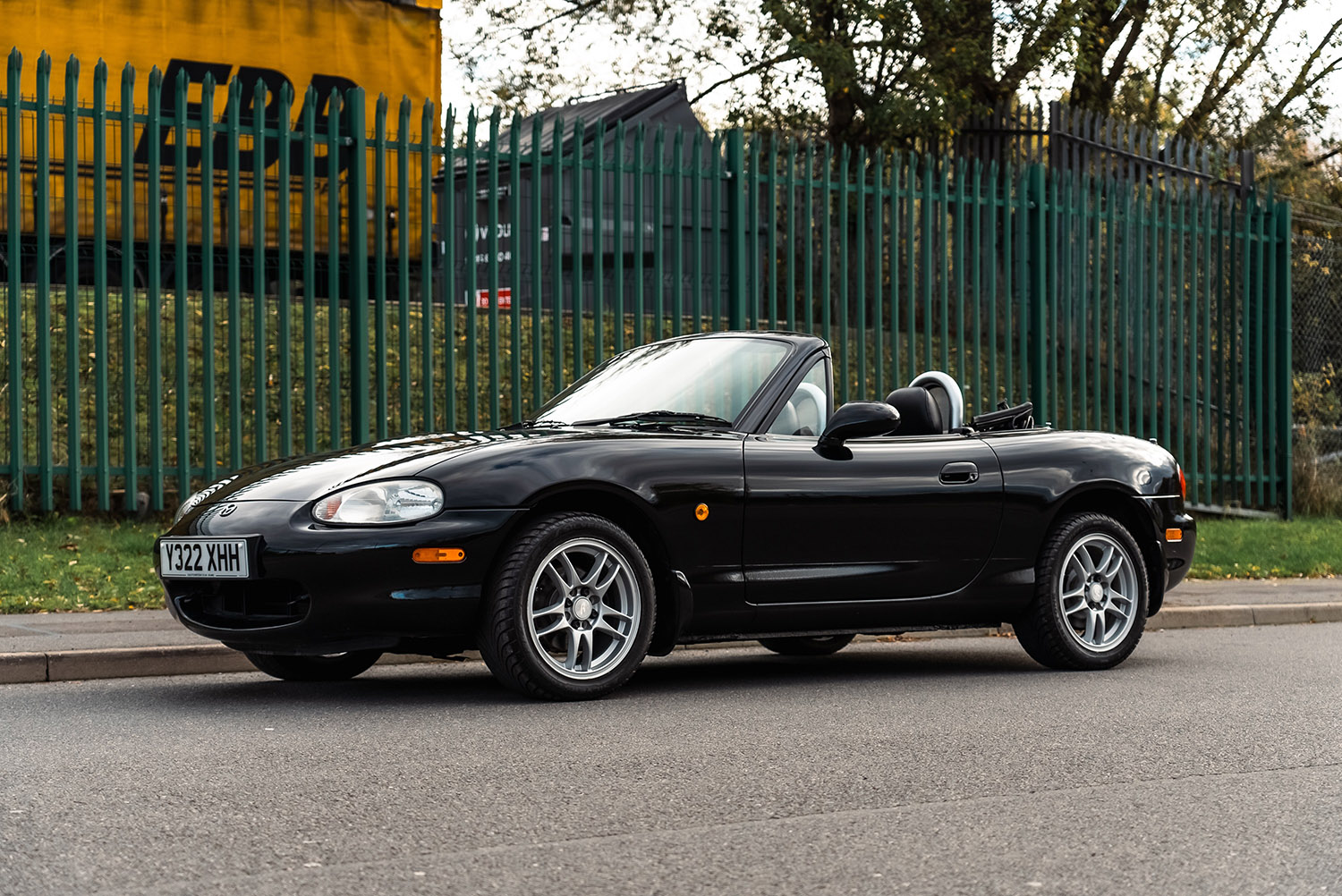
The MX-5 is sometimes referred to as the Mazda MX-5 NA, and is the original version of Mazda’s lightweight two-seat roadster. Launched in 1989, it revived the simple British sports car formula — front engine, rear-wheel drive, manual gearbox, low weight and open-top motoring — but added Japanese reliability and everyday usability.
Known as the Miata in North America and Eunos Roadster in Japan, the NA is instantly recognised by its pop-up headlights and compact proportions.
For buyers, its appeal is straightforward: it is fun at sensible speeds, mechanically robust, easy to maintain and still relatively affordable compared with many classic sports cars. The best cars feel light, accurate and unfiltered. The worst ones are rusty, badly modified or poorly repaired. Buy carefully and the NA MX-5 remains one of the most enjoyable entry points into classic car ownership.
When was the Mazda MX-5 produced?
The first-generation Mazda MX-5, known by its NA model code, entered production in April 1989 and continued until 1997. It was followed by the second-generation NB, which was shown in 1997 and arrived for the 1998 model year.
For buyers, “1989 to 1997” covers the core NA shape: pop-up headlights, compact body, simple cabin and either 1.6-litre or 1.8-litre four-cylinder power, depending on year and market.
How many MX-5s were made, and where?
Mazda created over 431,000 first-generation NA MX-5s between 1989 and 1997. Production took place in Japan at Mazda’s Ujina Plant No.1 in Hiroshima, where MX-5 mass production began in April 1989.
This makes the NA far more common than many older classic roadsters, but good original cars are becoming harder to find. UK buyers will also encounter Japanese-market Eunos Roadsters, many of which were privately imported and can be excellent buys if condition and history check out.
What changes were made to the Mazda MX-5 over the years?
Early NA MX-5s used a 1.6-litre twin-cam four-cylinder engine and five-speed manual gearbox. These cars are light, rev-happy and often considered the purest of the breed. In 1994, most markets moved to a 1.8-litre engine, bringing more torque and power, along with useful structural bracing. The 1.8 also introduced stronger running gear and, on many cars, a more desirable Torsen limited-slip differential.
Some markets retained a cheaper late 1.6-litre model, but with lower output than the early 1.6, so buyers should check exact specification rather than assuming all 1.6s are the same. Special editions appeared throughout the NA’s life, often with unique colours, leather trim, upgraded stereos, alloy wheels or limited-slip differentials.
In broad terms, early 1.6 cars are prized for lightness and character, while 1.8 cars are valued for torque, equipment and better refinement. Condition matters more than badge detail!
What are the common problems with Mazda MX-5?
Rust is the biggest issue by far. Rear sills, rear arches, floor areas and chassis rails need careful inspection, and cosmetic bubbling can hide structural corrosion. Blocked hood drains are a common cause of rear sill rot, so damp carpets or musty interiors should not be ignored.
Mechanically, the MX-5 is strong, but neglected cars can suffer from tired suspension bushes, sticking brake calipers, oil leaks, noisy hydraulic tappets and poor cooling system maintenance. Cambelt history should be checked, although the engine is generally robust when serviced properly.
Many cars have been modified. Some upgrades are worthwhile, but cheap coilovers, poor alignment, noisy exhausts, badly fitted turbo kits and cut-about interiors can make a car worse rather than better. Accident damage and poor rust repairs are also common, so inspect the underside, panel gaps and paintwork carefully.
What should I look for when buying a Mazda MX-5?
Buy the best shell you can afford. Mechanical problems are usually easier to fix than corrosion, so inspect the rear sills, wheelarches, chassis rails, floors, boot, scuttle and suspension mounting areas before worrying about trim or wheels. Check that the hood drains are clear, carpets are dry and the boot is not damp.
Look for evidence of regular servicing, cambelt changes, brake maintenance and quality rust repairs. A standard or lightly upgraded car with good history is normally safer than a cheap modified one. On a test drive, it should start cleanly, idle smoothly, shift neatly and track straight. A specialist inspection is generally money well spent, especially if you’ve not owned an MX-5 before.
Where does the Mazda MX-5 tend to rust?
The main rust areas are the rear sills and rear wheelarches. Water from the hood drain system can collect inside the sill structure if drains are blocked, causing corrosion from the inside out. By the time bubbling appears externally, repairs may already be more involved than they look.
Also check the front chassis rails, floors, jacking points, boot floor, battery tray, suspension mounting areas, windscreen surround and lower front wings. Imported Eunos Roadsters can be cleaner underneath than long-term UK cars, but age, storage and previous repairs matter more than market of origin. Fresh under seal should generally be treated with caution unless there are photographs and invoices proving what was repaired underneath it.
Common corrosive areas on the MX-5

Rear wheelarches

Inner and outer sills

Battery tray and boot floor
Mazda MX-5 Checklist
- Officially the Mk1 MX-5 is known as the NA to differentiate from later generations, though many also refer to it as the Mk1; JDM-market versions are technically Eunos Roadsters, not MX-5s but are fundamentally the same car with different badging
- This branding will be the most obvious way to tell an MX-5 from a Eunos Roadster, other obvious signs being the square rear numberplate recess on JDM cars
- 6 and 1.8-litre engines are fundamentally the same, though there are detail differences and the later European market 1.6s sold after 1994 have power restricted to 95PS (70kW)
- Engines are generally considered tough and reliable when looked after properly; the usual checks are a sensible starting point so make sure coolant and oil levels are correct and there’s no ‘mayonnaise’ on the oil filler cap
- Oil leaks at the back of the rocker cover are common and usually down to an easily replaced seal on the cam position sensor
- Ask when the cambelt was last changed and if the owner doesn’t know or there’s no history to demonstrate it’s been done recently factor this into your bargaining – it’s not a big or expensive job, though
- Check everywhere for rust but be especially vigilant around the sills and rear arches and use these as a reference for the rest of the car; most will have had repairs or patching at some point but check the quality of the work and whether it was a proper fix or just a bodge to get through an MoT
- Blocked hood drains can rot the sills from the inside out – cheap brushes are available for keeping them clear and if ‘rodding’ results in gunge and a flood of water from the tubes the owner probably hasn’t been on top of this; also check for wet carpets and leaking hoods
- There are plenty of bushings and pivots that can wear out on the suspension so beware clonks and rattles; geometry is adjustable and should be checked and adjusted to get the best out of the handling
- Some JDM Eunos models had viscous limited-slip differentials – jack the car up and turn the rear wheel to see if both move in the same direction as a sign, though many will by now have worn out and become ‘open’ diffs; tougher Torsen diffs were fitted to some JDM special editions and are much coveted
- Standard NA MX-5s ride very high and can look rather ungainly but many owners will already have fitted aftermarket springs and/or dampers to lower the car; there are endless options here but beware the temptation to go too stiff
- The NA’s structure isn’t the most rigid so shudders and rattles over rough roads aren’t unusual (especially on non-standard suspension or bigger wheels) but serious looseness may hint at more serious structural issues
- Brake calipers can seize through lack of use, especially the rears if the car has been left for long periods with the handbrake on – replacements are easy enough to source and fit but annoyingly expensive
- Check the hood – NAs originally came with a zip-out plastic rear screen which can crack with age or improper folding while the vinyl wears out with time; aftermarket replacement hoods are fine and relatively affordable but consider the condition as part of your bargaining
- NB/Mk2 hoods with the glass rear screen are a popular upgrade so don’t be surprised if you find a car with this fitted
- Control cables for the ventilation system can snap so run the fan and cycle through the different settings to make sure you can vary the airflow as required as it’s a fiddly fix
How does the MX-5 drive?
With its cute image, modest power and emphasis on handling rather than outright speed, the MX-5 has always battled against more macho types sneering at its supposed effeminate image. Thankfully they are now being drowned out by those appreciating the relevance of small size, lack of weight and fun at the wheel over ridiculous horsepower, irrelevant performance and status-based posing.
At around a tonne in weight, the NA MX-5 feels sprightly even with the 115PS (85kW) of the standard 1.6-litre engine, its appetite for revs and pairing a delightfully positive, short-shift manual gearbox more than making up for the modest performance stats.
Double wishbone suspension all round, perfect weight distribution, sharp steering and that natural rear-wheel-drive balance make the MX-5 huge fun. The fact you can literally drive it flat out across country and never trouble a speed limit is one of life’s great joys. Maybe the hairdressers were onto something all along…
What’s good about the Mazda MX-5?
The deeper you delve into the NA MX-5 story the more you appreciate how obsessively engineered every last detail of this car was, the fact even the cam cover was designed to be aesthetically pleasing just one example.
The design is matched with timeless appeal as well, the ease with which you can throw back the roof and let rip meaning every drive can put a smile on your face. The European roadsters that so inspired the MX-5 had demonstrated this already, of course, but the combination with Japanese build quality and reliability were the icing on the cake.
It’s also a very simple car and easy for the DIY enthusiast to work on and fix, with a wide support network of accumulated knowledge, passionate owners and affordable parts supply. The scope for tuning, modifications and upgrades is also huge, and something many owners enjoy exploring.
What’s bad about the Mazda MX-5?
While still considered a ‘modern’ interpretation of classic roadsters the oldest NA MX-5s are now over 30 years old themselves, this and the fact they were cheap for much of that period meaning time is rapidly catching up with them. They’re mechanically tough and cheap to keep running, but corrosion is now killing them off at a rate of knots. The fact they’re still not valuable enough to make expensive bodywork repairs financially viable means many have rotted away.
Those that haven’t may have survived this far with a succession of crude bodges to scrape through the MoT, but you can only keep deep-seated corrosion at bay for so long and the number of rust-free cars is rapidly diminishing. Modding is also a big part of MX-5 culture, but makes finding an original car in good condition even harder. There may still be plenty in the market, but finding the ones worth buying will take time, determination and perhaps more money than you’d bargained for.
How easy is it to get hold of parts for the Mazda MX-5?
Very easy by classic car standards. The NA MX-5 has excellent parts support, with new, used, pattern and performance parts widely available from MX-5 specialists. Service items, brakes, suspension, trim, hoods and repair panels are generally easy to source. Rare special-edition trim can be harder to replace.
Is the Mazda MX-5 classed as a classic car for vehicle insurance? And why?
Yes, many insurers will treat a 1989–1997 NA MX-5 as a classic, particularly where it is a second car, used for limited mileage and kept in good condition. The earliest examples are now more than 35 years old, and even the final NA cars are old enough to be viewed as modern classics.
Its case is helped by enthusiast ownership, strong club support, rising interest in original cars and the fact that good examples are increasingly collectable. However, not every MX-5 will automatically suit a classic policy. A heavily modified daily driver, high-mileage commuter or poorly stored car may be treated differently from a garaged, standard weekend car with agreed value.
How much does it cost to insure a Mazda MX-5?
Goodwood Classic Solutions offers specialist Mazda insurance from just £115 per year.
There is no single figure, though, as the cost will depend on a whole host of different factors relating the driver, vehicle value, mileage, modifications, intended use, and more.
The cost can be reduced with things like limited mileage discounts, which set a soft cap on the number of miles you’ll drive your MX-5 in a year. Give our team of experts a call on 01243 913 333 or get a quote online now, to see how much we can save you on Mazda MX-5 insurance.
How do the condition, modifications and how the MX-5 is used affect insurance premiums?
Condition matters because a clean, original, rust-free NA may be worth far more than a tired example. An agreed value should reflect the car’s true condition, restoration history and market value. Poor condition may reduce value, but it does not always mean cheaper insurance if the car is seen as a higher risk.
Modifications must be declared, to avoid issues later on if you ever find you need to make a claim. Sensible upgrades such as suspension refreshes, brake improvements or discreet reliability upgrades may be acceptable, but turbocharging, engine swaps, track preparation or major cosmetic changes can increase premiums or reduce insurer choice.
Use is just as important. Limited-mileage weekend use, garaging and club ownership can help. Commuting, business use, street parking, track days or high annual mileage will usually need specific cover and may increase the premium.
Is specialist classic car insurance a good idea for the Mazda MX-5?
Yes, for a good NA MX-5 it often makes sense. Specialist classic policies from Goodwood Classic Solutions can offer agreed value, limited mileage discounts, salvage retention and modification cover. That is useful for a car where condition, originality and enthusiast value may not be reflected properly by a standard market-value policy.
What do people love about Mazda MX-5?
People love the NA MX-5 because it can make ordinary roads feel special. It is not about huge power; it is about balance, steering feel, gearchange quality and the sense that the whole car is working with you. The manual gearbox is one of its great pleasures, the controls are light and accurate, and the car feels approachable even for less experienced drivers.
Owners also appreciate the reliability. Compared with many older classic roadsters, the MX-5 is easy to start, easy to service and happy to be used regularly. The roof is simple, the driving position is snug but friendly, and parts support is strong. It has charm without demanding constant compromise. That is why so many people buy one as a first classic and end up keeping it.
Who is the Mazda MX-5 recommended for?
The NA MX-5 is ideal for buyers who want an usable, affordable and genuinely enjoyable classic sports car. It suits first-time classic owners, weekend drivers and enthusiasts who value handling over outright speed. It is also a strong choice for those who want good parts supply and a large knowledge base.
It is less suitable for anyone needing rear seats, lots of luggage space or effortless motorway refinement. The best advice is simple: buy on body condition first, specification second.
What are the most popular specifications for Mazda MX-5?
The most sought-after NA MX-5s are usually early 1.6-litre manual cars and later 1.8-litre manuals with a limited-slip differential. Enthusiasts like the early 1.6 because it feels light, eager and close to the original concept. The 1.8 is popular with buyers who want more torque, improved bracing and better everyday flexibility.
Japanese-market Eunos Roadsters are also popular, especially well-kept V-Special cars with tan leather, wood trim and a limited-slip differential. UK special editions can be desirable too, but condition and rust prevention are more important than colour, trim or badges. Avoid heavily modified cars unless the work is high quality, fully declared and properly documented.
Which model of MX-5 to choose?
There are effectively three engine choices with the NA MX-5, these being the original 115PS (85kW) 1.6, the later 1.8 and the post-1994 1.6 with its throttled-back 95PS (70kW) output. The situation is confused by the large number of Japanese Domestic Market (JDM) Eunos Roadsters on British roads, many of these sticking with the higher-output 1.6. Some of these were also four-speed automatics but the less said about them the better.
While some prefer the ‘correct’ Mazda badging of the UK-market cars it’s probably best to be open-minded and buy on condition first, badge second given the Eunos version is pretty much identical.
Japanese cars were also sold in various desirable limited editions not seen here, with upgrades like Bilstein dampers, BBS wheels, limited-slip diffs and more. In terms of engine the 1.8 has a bit more torque and flexibility but the original 1.6 with its shorter gearing and revvier nature is often favoured on the basis it’s more fun to drive. And if tenths off your 0-62 time are a priority you’re probably not the target audience anyway.
Specifications – Mazda MX-5 (NA) 1.6 (pre-1994/JDM)
Engine
1.6-litre four-cylinder, petrol
Power
115PS (86kW) @ 6,500rpm
Torque
135Nm (100lb ft) @ 5,500rpm
Transmission
Five-speed manual, rear-wheel drive
Kerb weight
955kg
0-62mph
8.8 seconds
Top speed
121mph
Production dates
1989-1997 (total production)