
BUYER’S GUIDE
Porsche 356 Review
The template for Porsche’s sports cars to this day, the 356 combines unmistakable looks with a suitably unique driving experience. If you’re looking to add one of these much-dreamed-of classics to your collection, then this buyer’s guide will help bring you up to speed on the different models and options available, how to spot a replica masquerading as the real thing, and how to protect your investment with insurance.

Engine
1.6-litre four-cylinder, petrol
Power
75PS (55kW) @ 5,000rpm
Torque
117Nm (86lb ft) @3,700rpm
Kerb weight
850kg
0-62mph
14.5 seconds
What is the Porsche 356?
Simply put, the 356 is the car that established Porsche as a sports car manufacturer. It is a rear-engined, rear-wheel-drive, air-cooled two-door sports car, sold as coupé, cabriolet, Speedster, Roadster and other body styles across its life. It is not a kit car or replica: a genuine 356 has Porsche identity, period-correct chassis/body details and provenance that can be checked against factory records.
For buyers today, the 356 offers light weight, compact dimensions, superb build quality and a driving experience that feels more delicate than later 911s. It is charming, valuable and highly usable when properly maintained. It is also expensive to restore badly, easy to misrepresent and vulnerable to rust. Buy the best-documented, most structurally sound car you can afford.
When was the Porsche 356 produced?
The Porsche 356 was produced from 1948 to 1965, with the first Porsche-badged car, the 356 “No. 1” Roadster, receiving approval in June 1948, and early aluminium-bodied cars were built by hand in Gmünd, Austria. Series production in Germany began at Stuttgart-Zuffenhausen in April 1950. Production continued until 1965, after the 911 had already been introduced.
Porsche states that around 78,000 Porsche 356s were produced by the end of production in 1965.
The first 52 rear-engined aluminium-bodied cars were built by hand in Austria between 1948 and 1950. From April 1950, series production moved to Stuttgart-Zuffenhausen, Germany, with bodies built by Reutter and later also Karmann. Some reference sources quote about 76,000, depending on how early and late cars are counted.
What changes were made to Porsche 356 over the years?
The early 356, now often called “Pre-A”, established the shape: lightweight body, rear-mounted air-cooled flat-four and compact cabin. Early cars had split or bent windscreens and close links to Porsche’s Volkswagen-derived engineering, although Porsche steadily developed its own components.
The 356 A arrived for 1956 with a curved windscreen, improved suspension and more mature road manners. Engine choices broadened, including more powerful Super versions and the exotic four-cam Carrera for serious enthusiasts and competition use.
The 356 B followed for 1960, with revised bodywork, higher bumpers, larger windows, improved ventilation and more refinement. The later T6 body brought a twin-grille engine lid on coupés, an external fuel filler and further practical updates.
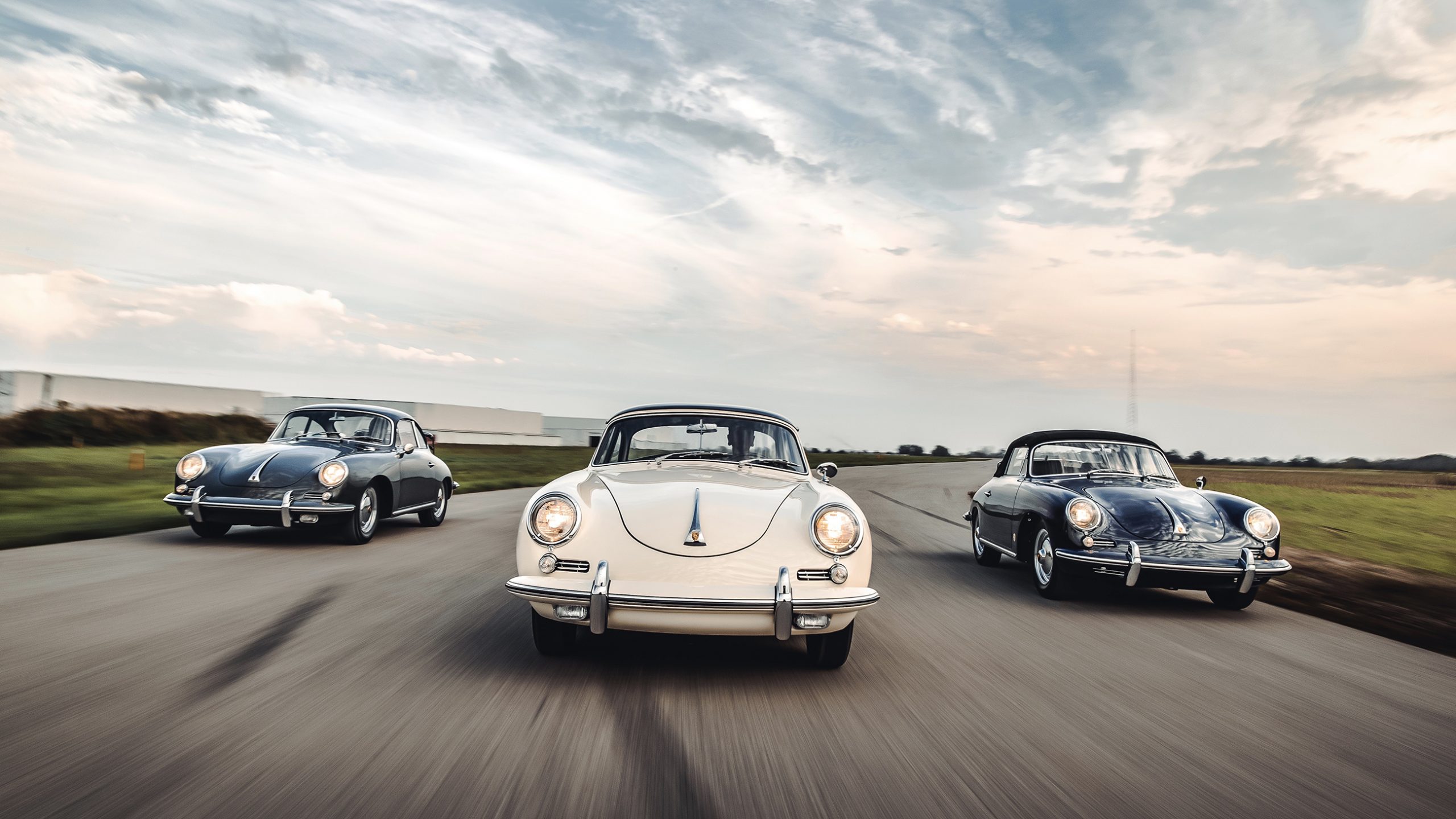
The final 356 C arrived for 1964. Its key improvement was standard four-wheel disc brakes, making it the easiest regular 356 to live with. The SC added stronger performance. Earlier cars are often more collectible; later C and SC cars are usually the most usable.
What is the difference between a Pre-A Porsche 356, a Porsche 356 A, a Porsche 356 B, and a Porsche 356 C?
The Porsche 356 had four main development stages, which are referred to as the Pre-A, 356 A, 356 B and 356 C.
They share the same basic concept—rear-engined, air-cooled flat-four sports cars—but Porsche refined the design continuously between 1948 and 1965. For buyers today, the differences affect value, usability, originality and maintenance.
Porsche 356 Pre-A
These Pre-A models were built from 1948 to 1955, making them the earliest cars. They feature a split or bent windscreen, have the simplest engineering, and are the most collectible. Although this is a term used by enthusiasts and not by Porsche themselves, it’s used to refer to all models built before the introduction of Porsche 356 A.
They’re often thought to have the purest styling and the greatest historical significance, making them the rarest and often the most valuable standard 356s. They also tend to be the least refined and most expensive to restore correctly.
• The original Gmünd-built aluminium-bodied cars (1948–1950)
• Early Stuttgart-built steel-bodied cars
• Split-windscreen (to 1952) and later bent-windscreen models
• 1100cc, 1300cc and 1500cc engines
Porsche 356 A
Built from 1955 to 1959, the Porsche 356 A is a slightly more refined vehicle, with a curved windscreen, improved suspension, and stronger engine.
The 356 A was Porsche’s first major redesign, and so looks similar to a late Pre-A but is noticeably more refined to drive.
• One-piece curved windscreen
• Revised suspension with improved ride and handling
• Better steering geometry
• Improved interior
• 1300cc, 1600cc, 1600cc Super, and Carrera four-cam engines
Porsche 356 B
The Porsche 356 B was created from 1960 until 1963, and provided revised body styling, larger windows, and improved practicality. These are among the easiest early 356s to live with.
The 356 B focused on improving practicality and comfort rather than reinventing the car, and was created with two different body styles – the T5 and T6.
Mechanically the T5 and T6 options are very similar, but the T6 introduced a number of practical and styling improvements that make it the more usable and, generally, more desirable version.
The T5 was built from late 1959 to mid-1962 (sold as 1960–61 model years), while the T6 replaced it in mid-1962 and remained in production until the end of 356 B production in 1963. The body was then carried over, with further mechanical changes, into the 356 C.
• Higher-mounted bumpers
• Larger front and rear windows
• Improved ventilation
• Revised headlights
• More comfortable cabin
Porsche 356 C
Finally, the 356 C saw out production from 1964 to 1965. Is boasted standard four-wheel disc brakes, improved braking, and feels the most modern and usable.
The 356 C was the final and most developed version, which introduced a host of features which make the C the most user-friendly model. This also includes the SC, which is not a different generation but simply the higher-performance version of the 356 C.
• Standard four-wheel disc brakes
• Stronger suspension components
• Improved wheels and hubs
• Better braking feel
• Minor interior improvements
• 1600C (75hp) or 1600SC (95hp) engines

What are the common problems with Porsche 356?
Rust is the biggest problem, as it is with so many classic cars. A 356 is an old, complex, ungalvanised steel-bodied car, and proper body restoration is expensive. Fresh paint can hide poor repairs, filler or badly aligned panels.
Mechanical issues are usually more manageable but still costly. Look for oil leaks, tired carburettors, worn ignition components, overheating, poor starting, weak brakes on drum-brake cars and gearbox synchromesh or linkage wear. The engine should feel crisp, not smoky or reluctant.
Authenticity is another major concern. Engines can be replaced, cars can be converted to more desirable specifications, and replicas or heavily altered cars may be advertised loosely. Check chassis numbers, engine numbers, body tags, Kardex/Certificate of Authenticity information where available, and restoration invoices. A specialist inspection is essential.
What should i look for when buying a Porsche 356?
Start with identity and structure. Confirm the car is a genuine Porsche 356, not a replica, and check chassis number, engine number, body tags, paperwork and restoration history. Matching numbers are valuable, but an honest, correctly repaired car can still be a good buy.
Inspect the shell carefully, ideally on a lift and with a 356 specialist. Look for poor panel gaps, doors that do not shut cleanly, uneven floors, filler, fresh underseal and missing photographic evidence of restoration.
On the road, the car should start cleanly, rev willingly, steer accurately, stop straight and change gear without heavy crunching. Buy on provenance, metalwork and quality of restoration before colour or trim.
Where does the Porsche 356 tend to rust?
Almost everywhere, if neglected. Key areas include floors, longitudinal chassis members, sills, rocker panels, battery box, door bottoms, lower wings, wheelarches, torsion tube areas, suspension mounts and the front nose structure. Also check around the pedal area, boot floor, engine bay seams and previous repair sections.
Open cars need extra care because structural integrity is even more important. Poorly repaired sills or floors can affect door fit and body alignment. Because the shell is complex and restoration costs are high, rust is not a minor bargaining point on a 356. It is often the difference between a good car and a financial trap.

Floorpan

Inner and outer sills

Bulkhead
Porsche 356 Checklist
- The range of models, engine types and body styles over the 356’s life is bewildering, but can be broken down into five major stages comprising the early ‘Gmünd’ cars, the Stuttgart-built ‘Pre-A’ series and then the A, B and C generations
- Body configurations over that time include coupe, cabriolets of various types, Speedster, so-called hardtop cabriolets and even limited production coachbuilt race cars like the GTL-Abarth
- The earliest cars have distinctive split windscreens, the ones that followed ditching the central spar but retaining a distinctive kink in its place; more modern curved screens came with the 356 A
- With just 50 or so Gmünd cars built these are hugely valuable collector cars now, Carrera models similarly big-league while Speedsters and cabriolets also command big prices
- While offered in a huge range of capacities and states of tune most 356s use versions of the twin carb, air-cooled, pushrod flat-four, the Super badge typically denoting the more powerful variants; Carreras featured a much more exotic evolution of the base engine with gear-driven overhead cams and significantly increased power
- Porsche-designed three-piece crankcase introduced in late 1954 marked a decisive step away from Volkswagen-related mechanical parts
- Huge range of engines, potential for tuning and interchangeability of parts means many 356s will have deviated from their original specification at some point in their lives, so choose whether you want to prioritise driveability or extra performance over originality
- If you’re chasing investment potential and value matching numbers provenance you’ll pay accordingly, and need to be absolutely certain the car’s history adds up before committing
- Whichever route you choose it pays to do your research to help refine your search parameters before taking the time to look at plenty of different cars for a sense of what’s out there, and the relative values
- Earlier cars appeal for their unadorned looks and direct links to Porsche’s early days, while later C generation 356s may be more driveable thanks to improved comfort, driveability, handling and standard disc brakes – choose which is more important for you early in your selection process!
- Corrosion is the biggest potential pitfall and cost, so be utterly scrupulous in your inspection of both the car and its history – many will have been through multiple restorations by now so make sure the most recent one is properly documented with a respected specialist
- Rust can take hold anywhere and any visible corrosion should be a warning about even more dangerous rot within the structure – floorpans, longitudinal chassis rails, bulkheads and suspension mounts are all critical areas so look under carpets and get the car on a ramp for a full inspection
- Pushrod engines are well-understood and relatively simple mechanically but still expensive to rebuild; significant oil leaks or smoke are significant worries, likewise rough running or lack of power
- Twin-cam Carrera engines are incredibly complicated and require expert – and expensive – care; if you’re buying a ‘Carrera’ make sure it is what it says it is and not a converted standard car, or an original with a replacement pushrod engine
- Steering and suspension components can wear prematurely if not correctly lubricated and maintained, even on cars that don’t get driven much – any looseness at the wheel or rattles over bumps should be investigated
How to spot a 356 replica masquerading as a genuine Porsche 356
Be wary of any advert which is vague about the car’s identity. A genuine Porsche 356 should have a Porsche chassis number (VIN), engine number, and documented history, not simply be described as “356 style”, “Speedster recreation” or “built to 356 specification”. If these details are missing, ask why.
Many replicas are based on Volkswagen Beetle chassis and running gear. Common clues include an engine bay that looks more like a Beetle than a Porsche, incorrect wheel offset, an unusually wide track, oversized modern disc brakes, replica alloy wheels, and suspension components that are clearly newer than the rest of the car. Inside, look for non-original dashboards, modern switches, incorrect gauges, aftermarket steering wheels or seats that don’t match period Porsche trim.
You can also check the location of the handbrake – if it’s between the front seats, then the vehicle is based on a Beetle. A true 356 should have the hand brake located under the dashboard, which is a detail overlooked by almost all replicas.
Poor proportions can also give a replica away. Check the shape of the windscreen, door apertures, bonnet, engine lid and bumper overriders against photographs of genuine cars. Finally, compare the asking price with the market. If a supposedly genuine 356 Speedster is advertised for a fraction of the price of comparable examples, treat it as a warning sign. Before buying, always verify the chassis and engine numbers with a recognised Porsche specialist.
How much does it cost to insure a Porsche 356?
There is no single price for classic car insurance on a Porsche 356, since the value and other factors can vary so much based on a whole host of factors.
Porsche classic car insurance starts at just £115 per year here at Goodwood Classic Solutions, so call our team of experts on 01243 913 333 to talk through your options, or get a quote online now.
Premiums depend on your vehicle’s value, your driving history and experience, annual mileage, security, modifications and more. Goodwood Classic Solutions covers Porsche models from the 356 onwards, but a genuine 356 is valuable enough that insurers will normally require detailed information before quoting.
How do the condition, modifications and how the Porsche 356 is used affect insurance premiums?
Condition has a direct effect on value, as a restored, matching-numbers Speedster or SC will need a higher agreed value than a driver-quality coupé. Poor condition may reduce value, but corrosion or weak documentation can also make the car harder to assess.
Modifications should be declared when taking out your policy, to ensure that you don’t have problems later on if you ever need to make a claim. Sensible safety or usability upgrades may be acceptable, such as 12-volt electrics, seat belts, electronic ignition or brake improvements. Outlaw builds, engine swaps, non-original bodywork or performance upgrades can change value and risk significantly. Fortunately, modification cover is available from Goodwood Classic Solutions, so you’ll be able to get proper insurance cover for your 356 regardles of what modifications have been made.
Use also matters, and limited mileage discounts can dramatically reduce your insurane premium if you’ll only be using your 356 for occasional weekend drives. Touring abroad, rallies, wedding hire, commuting or competition use may require specific cover. The policy should match how the car is actually used, and our expert team can help you arrange the right cover when you phone us on 01243 913 333
Is specialist classic car insurance a good idea for the Porsche 356?
Yes, genuine 356 deserves specialist classic insurance with agreed value, salvage retention, limited mileage options and access to appropriate repairers. The wrong policy could undervalue the car or send it to a repairer without the skills to restore its structure, panels and originality correctly.
How does the Porsche 356 drive?
The 356 may be far more than a Beetle in fancy bodywork but you should still be realistic in your expectations for performance, on the basis many have well under 100PS (74kW) to play with and early ones could have as little as half that. Zero to 60 times in the teens and top speeds around 100mph on a good day don’t sound too impressive in a modern context but a good 356 should prove just how meaningless numbers are for quantifying a driving experience.
The four-cylinder engine may not be as exotic as the six of a 911 either but it’s still smooth and characterful, with a distinctive sound of its own. The slippery aerodynamics mean a 356 is impressively fast and refined on a cruise as well, while a properly sorted one should have the kind of precision to the controls we associate with later Porsches, albeit with the clear-headed minimalism of a true original.
Quirks like offset, floor-hinged pedals and a long-throw gearshift (synchronised after 1953) add to the vibe rather than detract, and a properly set up 356 should be an absolute delight.
What’s good about the Porsche 356?
‘Unique’ is a much over-used description but, truly, there’s nothing out there that looks like a Porsche, and in the 356 we have the origins of that distinctive shape in its purest form. Earlier models with their smaller bumpers and unadorned bodywork are perhaps the most elegant, the coupe establishing that iconic profile the 911 lives by to this day while the various cabriolets and Speedsters have an effortless Californian cool alluding to summer road trips in the sunshine.
While originality is increasingly valued, the 356 also responds well to tasteful customisation and modding, be that inspired by the motorsport vibe of the Carrera variants, minimalist versions stripped of bumpers and chrome or even ‘outlaw’ low riders or restomods with seriously feisty engine upgrades. A broad church, then. But at its heart a 356 remains unmistakeable, no matter how original or otherwise.
What’s bad about the Porsche 356?
For the uninitiated the Porsche scene can appear intimidatingly complicated, tribal and teeming with self-appointed experts claiming their voice is the only one worth hearing. Add to that a bewildering array of model types, the detail model year updates for the purists to obsess over, plus the seemingly endless variations on engine capacity and states of tune to choose from, and the path to a perfect 356 can look baffling.
Add to that the interchangeability of parts and you really need to know what you’re looking for – and looking at – before making a big financial commitment. You also have to factor in that even the youngest cars are now nearly 60 years old, so finding a truly rust free one is going to be near impossible, while restoring a rotten one to an appropriate standard could prove ruinous. There’s no such thing as a cheap 356 any more, either. Very much buyer beware, especially given the emotional draw and risk of heart overtaking head.
How easy is it to get hold of parts for the Porsche 356?
Parts support is good for a car of this age and value. Porsche Classic and specialists such as Stoddard and Restoration Design support genuine 356 maintenance and restoration. Routine mechanical parts, trim and repair panels are available, but rare original parts, Carrera components and high-quality bodywork can be expensive.
What do people love about Porsche 356?
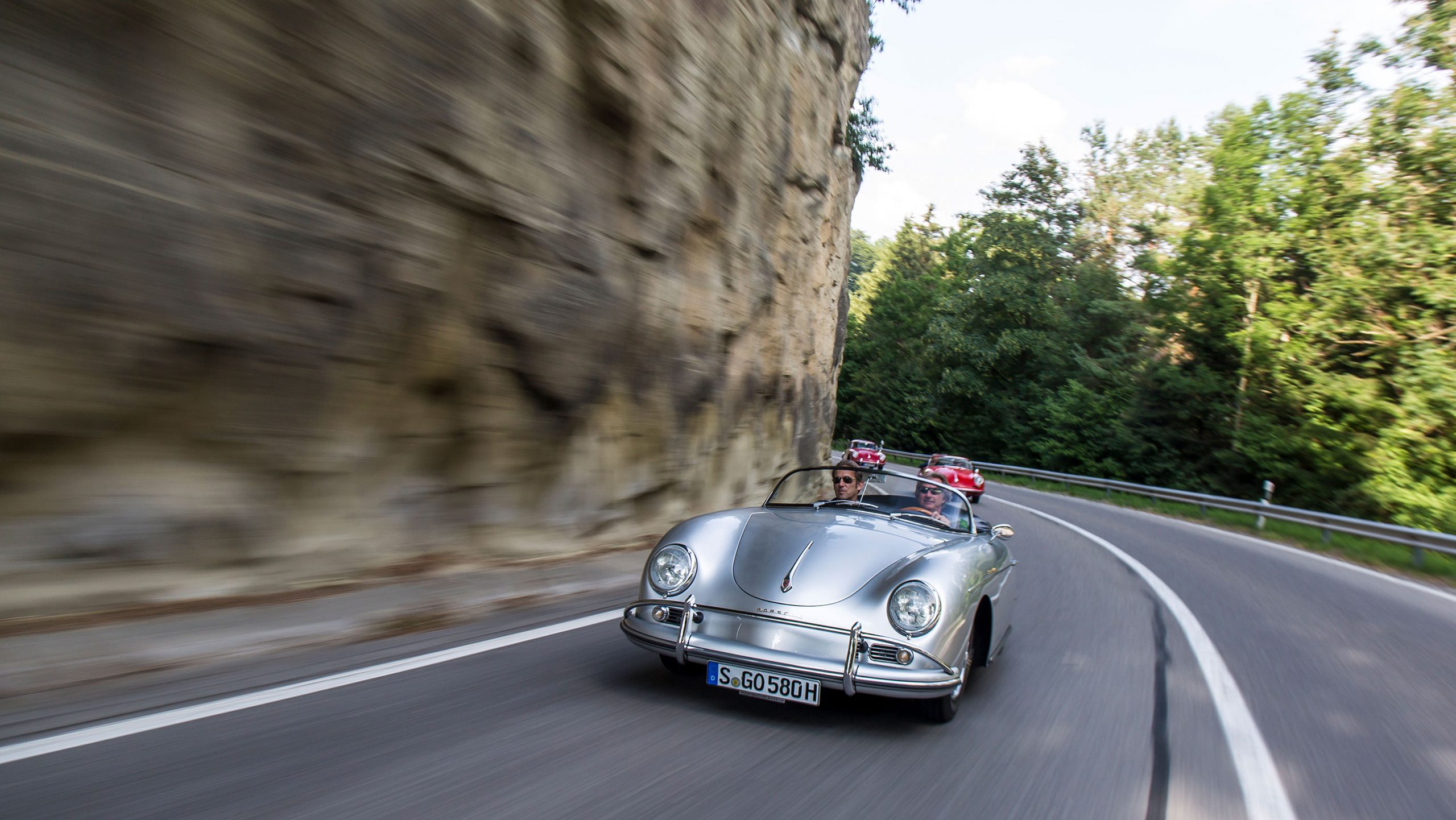
People love the 356 because it feels pure. It is light, small, beautifully proportioned and alive at modest speeds. The steering is delicate, the gearbox is mechanical and the air-cooled flat-four gives the car real character without needing huge power.
There is also the historical appeal. This is the foundation of Porsche’s road-car story and the ancestor of the 911. A good 356 feels special without being intimidating. It can be used for Sunday drives, tours, shows and rallies, provided it is maintained correctly.
Owners also love the quality of the engineering. The car is simple by modern standards, but it was thoughtfully developed over nearly two decades. That combination of charm, usability and significance is why genuine 356s remain so desirable.
Who is the Porsche 356 recommended for?
The 356 is ideal for an informed enthusiast who values history, originality and quality over easy performance. It suits careful owners who will use specialists, keep records and maintain the car properly.
It is not ideal for bargain hunters or anyone tempted by a cheap restoration project. A good 356 is a joy; a bad one can be financially brutal. First-time buyers should favour the best documented, most structurally sound pushrod car they can afford.
What are the most popular specifications for Porsche 356?
For many buyers, the sweet spot is a sound pushrod-engined 356 A, B or C coupé. Coupés are usually more attainable than open cars, structurally stronger and still deliver the essential 356 experience. A 356 C or SC is particularly popular with drivers because of its disc brakes and improved usability.
Speedsters, Cabriolets and Roadsters are highly desirable but cost significantly more and need careful authentication. Carrera models are the most exotic and valuable, but their four-cam engines require specialist knowledge and deep budgets.
Originality, matching numbers, colour, body style and documented history all matter. But condition comes first: a properly restored coupé is a better buy than a glamorous open car hiding poor metalwork.
Which model of Porsche 356 to choose?
Rarity and proximity to Porsche’s origin story means ‘Gmünd’ 356s are the preserve of truly elite collectors, split or ‘bent’ screen ‘Pre-A’ models similarly coveted for their originality. If you’re after one of the faster 356s the appeal of the Carrera models is clear, but they’re also hugely expensive and the specialist care required for the exotic engines rules them out for most real-world buyers.
That leaves the rest of us pondering ‘regular’ pushrod engined A, B and C models. Bodystyle will be down to preference but the iconic looks of the Speedster come at a cost, with cabriolets (distinguished by the taller, ‘framed’ windscreen) not far behind. All things relative coupes are more attainable, and for design and driving purity look very attractive indeed. For the cleaner styling a 356 A coupe would seem a very appealing choice, the B and C offering progressively more power, driveability and luxury.
Overall, having settled on your preferred shape the common advice across all variants would be to buy the best you can afford with a solid history verifying its condition and provenance.
Specifications – Porsche 356 A 1600 Super
Engine
1.6-litre four-cylinder, petrol
Power
75PS (55kW) @ 5,000rpm
Torque
117Nm (86lb ft) @3,700rpm
Transmission
Four-speed manual, rear-wheel drive
Kerb weight
850kg
0-62mph
14.5 seconds
Top speed
109mph
Production dates
1948-1966 (all models)