BUYER’S GUIDE
Chevrolet Camaro (second-generation) review
GM’s Mustang rival hit its ‘70s stride with its big-selling second-generation version…

Engine
5.7-litre petrol V8
Power
365PS (268kW) @ 6,000rpm
Torque
515Nm (380lb ft) @ 4,000rpm
Kerb weight
c. 1,515kg
0-62mph
c. 5.5 seconds
What Is It?
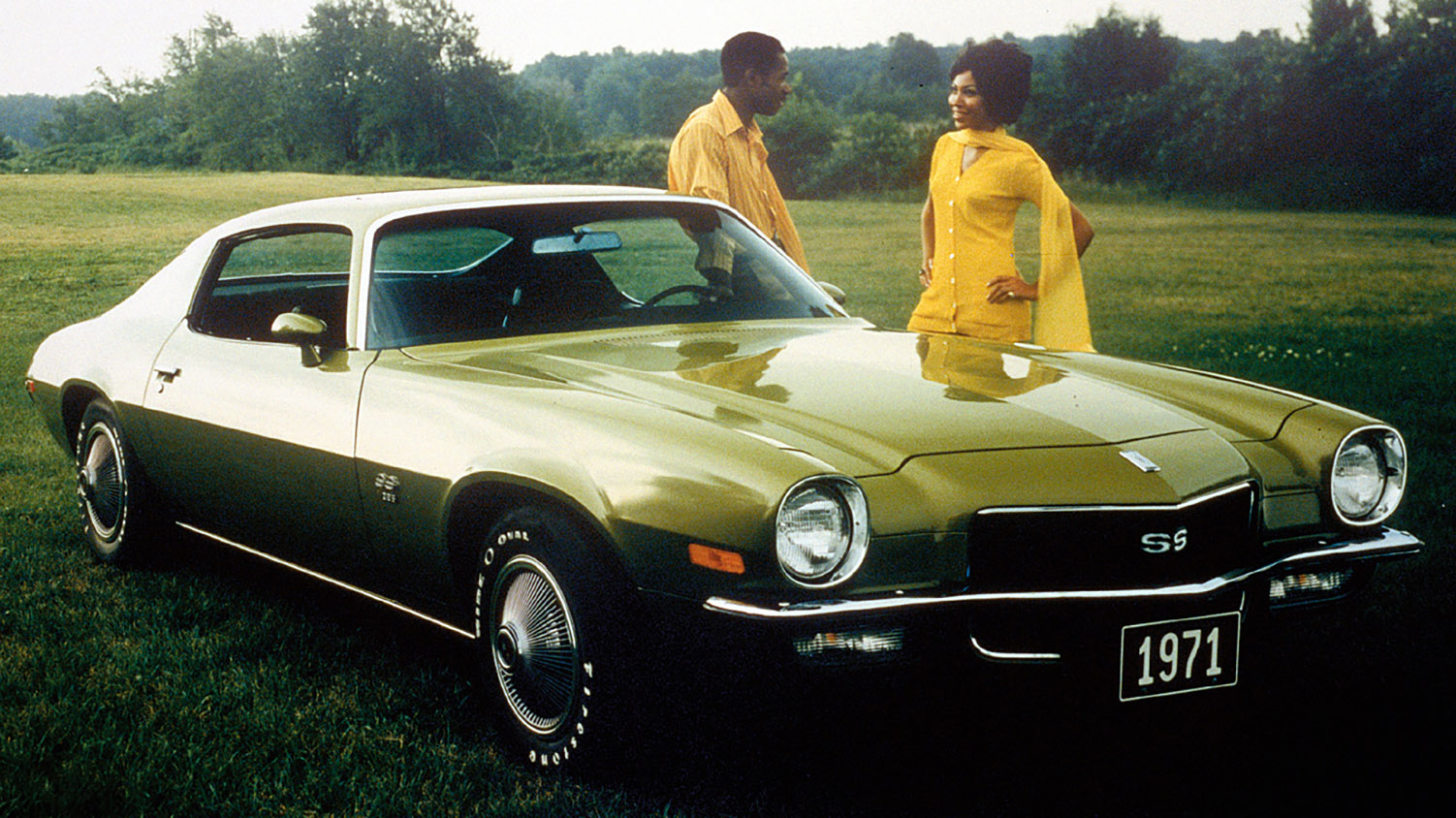
Along with the Ford Mustang, the Chevrolet Camaro embodies the popular image of the American muscle car through its combination of (then) blue-collar affordability, easy power and endless customisation options. Where the original Camaro was developed as a relatively hasty response to the Mustang, the second-generation version was a more complete car with a definite European influence to its lines, especially in the earlier versions. Offered with a huge variety of engines, transmissions and trims over its decade-plus on sale, the second-gen Camaro can present as a cruiser or a bruiser as tastes and budget permit and, on this side of the Atlantic, appeals for being a slightly less obvious choice than a Mustang.
Corrosive Areas

Sills inside and out

Window surrounds

Floors and seatbelt mounts
Checklist
- Second-generation Camaro launched in 1970 as a coupe-only model with a brilliantly named engine range comprising Turbo Thrift 250 six-cylinder through Turbo-Fire small-block 307s and 350s to big-block Turbo-Jet 396
- Popular trim levels comprised base Camaro, Super Sport (SS), Rally Sport (RS) and Z28, made confusing by fact RS package could be applied to all versions; more luxurious LT option added later
- RS package – known by its Z22 option code – desirable for the ‘split bumper’ look favoured by purists
- Z28 was the performance version, with the LT1 365PS (268kW) small-block, upgraded suspension and other mods
- Various transmissions available, from three- and four-speed manuals to two- and three-speed autos; selection of rear axle ratios also offered
- Significant facelift in 1974 switched to beam-style impact bumpers and a shallower grille; Corvette-style quad rear lights changed to single-lens arrangement for 1975
- Another significant change came in 1978 with the switch to plastic bumpers
- V6 engine added in 1980, unloved 269 V8 also appeared around this time
- Popularity of customisation and interchangeability of parts means many will have been modified and a ‘matching numbers’ original will be near-impossible to find
- Split bumpers don’t always mean a RS – check history for the Z22 option code and that correct brackets are present
- Similarly, Z28 badges don’t necessarily a Z28 make – again, check provenance and history if paying a premium
- Small-block 350 cu in V8s the most popular and common engines, in many and various guises, and supported by huge knowledge base and parts back-up
- Engines and transmissions simple and tough when properly maintained
- Unibody construction hides a multitude of rust traps that may not be immediately obvious on first inspection
- Sills (also known as rocker panels) an inevitable indicator of general condition but floor, rear quarters, window surrounds and firewall should all be thoroughly inspected
How does it drive?
The second-generation Camaro was available with such a huge range of engines, power outputs, transmissions and tuning packages, you basically have to assess the driving experience on what you have before you! Six-cylinder engines have their work cut out against the weight and won’t be flattered by their three- or even two-speed transmissions. A proper Camaro should probably have a V8, though, and the endlessly tuneable small-block in all its guises offers the authentic muscle car soundtrack and performance, though this was progressively strangled by emissions regs over the car’s life. Or at least was in stock form. An early small-block with the four-speed Hurst shift manual and non-assisted steering is probably the one you’re dreaming of, and a suitably macho driving experience; the 365PS (268kW) Z28 LT1 version delivering performance that still feels serious to this day.
What’s good?
The second-generation Camaro remains a handsome car, and while the ‘70s styling got progressively more heavy-handed and garish as the years went on, the car wore the bigger bumpers and other accoutrements better than many of its contemporaries. So, while purists will always prefer the simplicity of the earlier 1970-1973 era, even the late ‘70s and early ‘80s models have something about them so it will come down to personal taste as much as anything.
Similarly, the driving experience can vary from slow and soggy to sharp and seriously quick as your tastes demand and, while you may be leaning on knowledge and parts from over the pond, there’s a huge pool of expertise and supplies for restoring and tuning an old Camaro to the way you want it. For fans of Americana, the fact the Camaro has a relatively smaller profile this side of the Atlantic also makes it an appealing alternative to the more globalist Mustang.
What’s bad?
That enormous bandwidth in powertrains, trims and specifications can be bewildering for those who don’t ‘speak American’ when it comes to choosing the right model, let alone trying to identify if what you’re seeing and being sold is what you’re actually getting. While it sold in the hundreds of thousands no two Camaros were probably alike, and you’ll need to do your homework on the many and various options codes and packs before committing to anything, especially if it’s selling at a premium and you’re buying remotely. This can all distract from the basics of making sure the bodywork and structure is sound, which is far from a given and can prove ruinous to put right if you buy with your heart more than your head.
Which model to choose?
It’s probably not worth wasting your time trying to track down a truly original second-gen Camaro in the specification in which it was sold, for the fact most will have been modified and customised to a degree over the years. Best to pinpoint your search to the era and look you like best, then refine the selection to the best example of that you can find. Safe to say, a small-block V8 of some description is probably the engine of choice, and the earlier the better if you want performance to match the looks.
Though, by this stage, many smog-strangled later ones will likely have been upgraded anyway. A manual will be more fun than an auto and, for our money, an earlier car with the desirable split bumpers and Corvette style quad rear lights is probably the nicest looking, though if you’re going all-in and dig the 70s or early 80s look these cars do have a certain kitsch appeal. If we had to call it, an early Z28 with four on the floor would be top of the list.
Specifications – Z28 (1970-73)
Engine
5.7-litre petrol V8
Power
365PS (268kW) @ 6,000rpm
Torque
515Nm (380lb ft) @ 4,000rpm
Transmission
Four-speed manual/three-speed auto, rear-wheel drive
Kerb weight
c. 1,515kg
0-62mph
c. 5.5 seconds
Top speed
c. 130mph
Production dates
1970-1981 (total production, all variants)