BUYER’S GUIDE
Triumph TR7 review
Why Triumph’s ‘70s wedge is finally coming of age as an attractive and affordable classic

Engine
2.0-litre 4-cylinder petrol
Power
106PS (78kW) @5,500rpm
Torque
161Nm (119lb ft) @ 3,500rpm
Kerb weight
c. 1,000kg
0-62mph
9.4 seconds
What Is It?
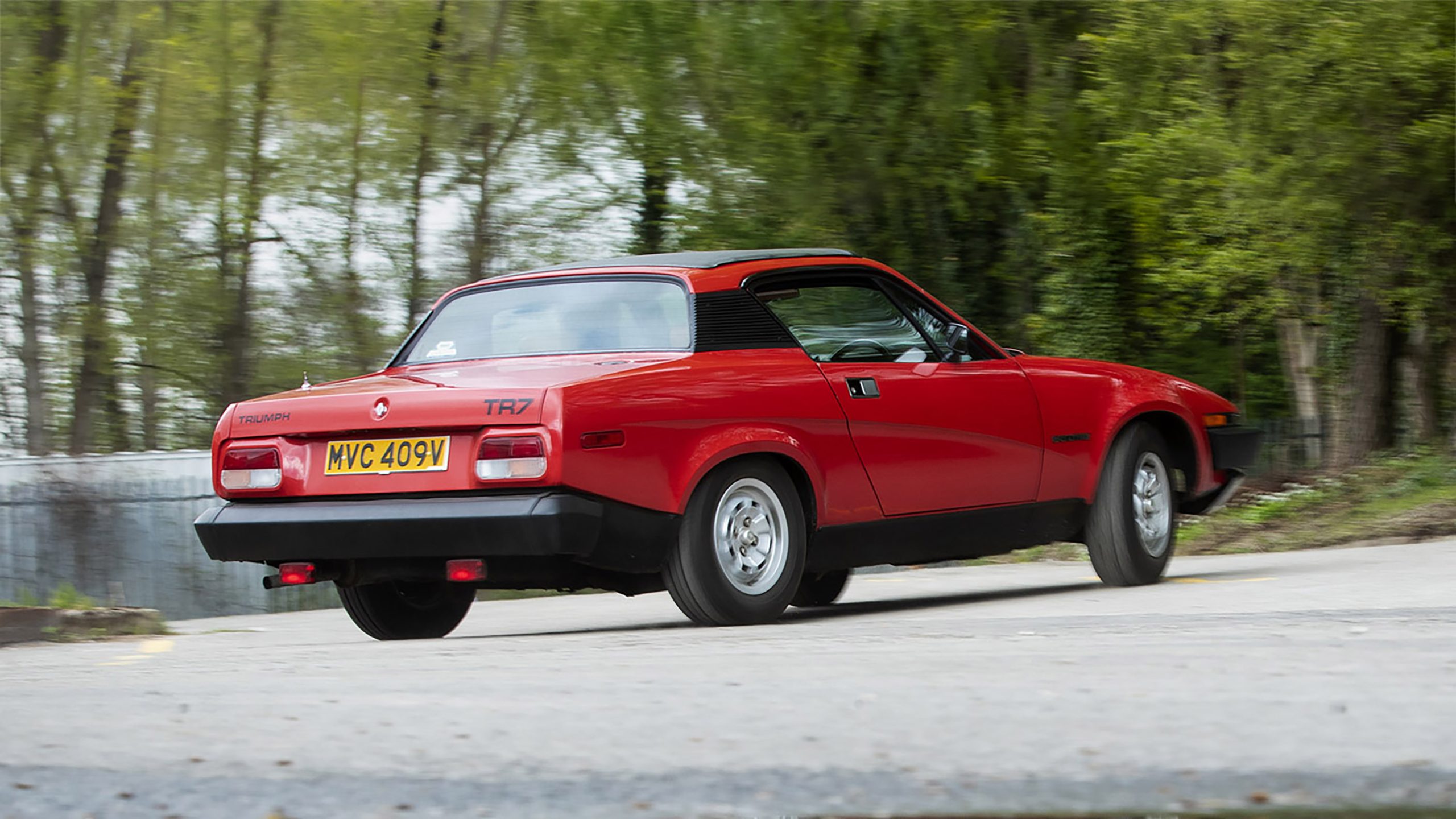
The last of Triumph’s esteemed and successful TR bloodline, the TR7 broke from tradition in terms of styling and engineering. Its wedge-shaped look is very much of its time but was something of a shock to the system compared with its predecessors. This and the patchy build quality common to all British cars of the era inevitably conspired against the TR7, the controversy of its looks consigning it to ugly duckling status compared with those that came before. But appreciation of its 1970s style is (finally) growing, this and the more modern underpinnings have earned it long overdue recognition as an affordable starter classic, with an enthusiastic fanbase and decent parts support.
Corrosive Areas

Sills

Strut towers

Front scuttle/bulkhead
Checklist
- Unitary construction, wedge styling and pop-up headlights were a big step up from the previous TR6, but a repurposed Dolomite engine and live rear axle were indicative of the financial and technical constraints on development
- The TR7 started as a coupe (Fixedhead Coupe in the jargon), the Drophead Coupe convertible only following in 1979 for the latter stages of the model’s life
- Early production TR7s built at the strike-prone Speke factory suffered quality issues before a shift to manufacturing in Canley and then Solihull
- Canley-built cars onwards identifiable by fitment of an improved five-speed manual gearbox and bonnet bulges carried over from the V8-powered TR8 built for the US market
- Twin-carb 1,998cc Dolomite-based engine a proven unit, delivering 106PS (78kW) in UK market cars, US models somewhat strangled by emissions regs and a lot less potent
- More powerful TR7 Sprint developed with the 16-valve engine from the Dolomite Sprint but canned with just a handful built in period
- Some TR7s may have been modified to Sprint spec, which is appealing if done properly, but if you’re paying over the odds for the real thing make sure the history confirms that’s what it is
- Engine generally reliable with proper care, regular oil changes and correct coolant — poor maintenance and lack of anti-freeze top-ups can lead to a warped head so check for cross-contamination of fluids, obvious signs of leaks or overheating
- Angled studs can make head removal a hassle if they’re corroded into place
- Five-speed gearbox generally considered more desirable; shift action should improve once warm but worn synchromeshes common
- Corrosion inevitably a major concern throughout the TR7’s unibody structure, and potentially expensive to repair properly
- Sills are as critical as they are vulnerable so make sure any repairs have been done properly and not just patch-ups over rotten metal — look under the car and inside it, lifting the carpets for a sense of what’s beneath
- Front suspension turrets also vulnerable and more difficult to repair properly than typical
- Front scuttle and rear bulkheads should also be checked, ditto the spare wheel well and suspension mounts
- V8-powered TR8 only sold in left-hand drive but conversions of UK TR7s not uncommon given easy availability of the Rover V8 used in period — check the quality of any work before taking the plunge
How does it drive?
It’s certainly a big step up from a TR6 and its predecessors, the switch to a unitary body design and McPherson strut front suspension all helping its handling and feeling a lot more modern than many contemporaries, as well as looking it. The live rear axle might sound a bit antiquated in this context, but the linkage arrangement holding it in place results in more secure and predictable handling than you might have credited, aided by reasonably sharp rack-and-pinion steering.
Performance with the UK-market 106PS (78kW) 2.0-litre motor is gutsy and helped by the later five-speed gearbox. Genuine Sprint versions offer a teasing taste of what might-have-been, the rarity of the real thing meaning some cars have benefitted from Dolomite Sprint engine swaps, likewise V8s in lieu of the TR8 remaining a US model only. Only the brakes really let the side down, these notoriously lacking in power in standard form and often upgraded.
What’s good?
Every dog has its day, and enthusiasm for the TR7’s of-its-time styling is finally starting to build, the better in suitably authentic ‘70s paint hues. True, it lacks the timeless nostalgia of earlier TRs or its MG contemporaries and, even half a century on, some in more traditional ‘classic’ circles may sniff at the pop-up headlights and modernist style when you pull up at the summer car meet.
But time has been kinder than many folks were back in the day, and a new crowd of enthusiasts are less hung up on such things. It’s also a more modern car to drive, both in performance and handling, making it more pleasant in modern traffic. Affordability and parts back-up also make it a relatively cost-effective and hassle-free ownership experience, assuming you can find one that isn’t rotting from the inside out…
What’s bad?
Like many British cars of its era the TR7 was a victim of the strikes, plant closures and industrial unrest afflicting domestic manufacturing. Early cars built at the Speke plant are known for having more issues than later ones, and lack attractive upgrades like the five-speed gearbox. But, by this stage, corrosion can afflict any TR7 and mean the difference between a viable project and hopeless waste of time and money.
Unitary construction makes this a structural as well as aesthetic issue, and more complicated to address. Historically low values mean many owners will have got by with cheap fixes, bodges and papering over the cracks, so a thorough check outside, inside and underneath is critical if you’re to avoid putting good money after bad.
Which model to choose?
Unless you widen the search to include US-spec TR8s, the main mechanical choice is transmission-based and whether you hold out for a later five-speed. Accepted wisdom says you should, unless you desperately crave an early car. Autos are probably best avoided unless needs must. The other main choice is between Fixed- or Drophead Coupe, which is to say hard- or soft-top.
Most consider the latter the more desirable for the looks and open top thrills, but the coupe has all-weather appeal, a stiffer structure, better refinement and the distinctive shape some prefer. It also has a visual link to the rally cars campaigned in period, which makes it an attractive choice for motorsport fans. Or, indeed, basis for a Sprint or V8 conversion.
Specifications – TR7 (five-speed manual version)
Engine
2.0-litre 4-cylinder petrol
Power
106PS (78kW) @5,500rpm
Torque
161Nm (119lb ft) @ 3,500rpm
Transmission
Four-/five-speed manual or three-speed automatic, rear-wheel drive
Kerb weight
c. 1,000kg
0-62mph
9.4 seconds
Top speed
109mph
Production dates
1975-1981